
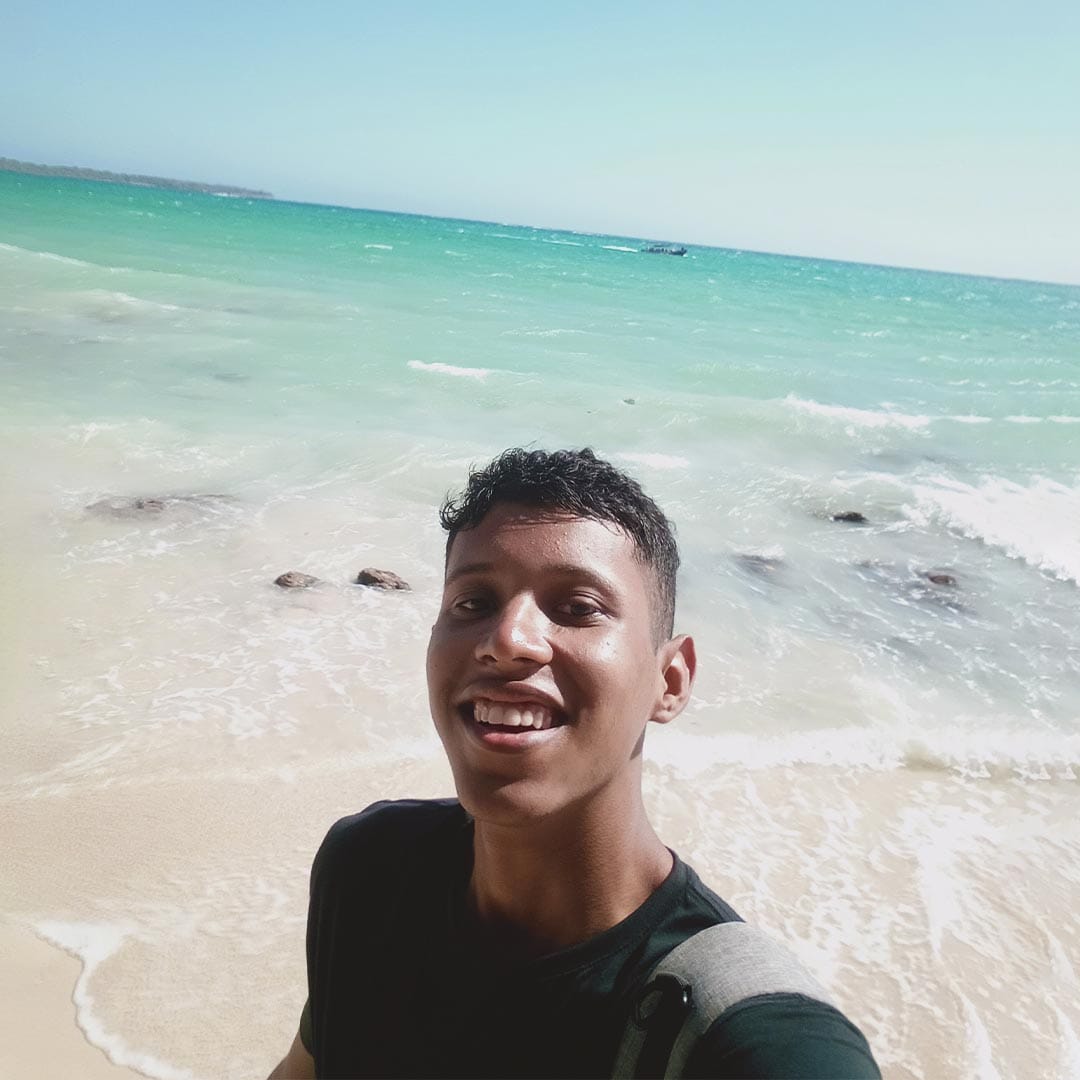
Most people, if they got this money in a prize, would blow it on vices and women within weeks. We haven't worked this hard to get here only to throw everything overboard and repeat the cliché of the poor guy who strikes it rich and wastes it. For a couple of years now I've been reflecting on what I call cycles of dissatisfaction. Patterns other people already lived through, inherited and repeated. The idea obsessed me and I put it into my novel Cansancio y libertad (Weariness and Freedom, 2022). For me, a fundamental part of life is identifying which mistakes not to make and which good decisions to take. With $15,000 in the account, this list of mistakes stops being theory.
For two young Colombians who grew up with the shortages of lower-middle-class families, $15,000 is a fortune. Even more so for me, since I had been covering Gurwi's expenses with credit card debt. We know it's a limited budget for building a company and living. Still, it is a budget, and it's the chance to stop being jacks-of-all-trades working with our bare hands. At last we'll have more hands on the team, better tools, and a better quality of life.
Winning first place in the #BuildInPublic category of RevenueCat's Shipaton is an immense achievement for us. Even more so as Colombians still living in Colombia, a country where raising capital is hard and corruption permeates everything.
I will never forget the episode with the then Minister of ICT, Mauricio Lizcano, who first congratulated our work and then ignored us. A perfect example of how a public official learns about a valuable project and never supports it, because his only interest is enriching himself and his friends. Nor will I forget my attempts with SENA's Fondo Emprender, the only state funding avenue for entrepreneurs in the country. They rejected me and, on top of it, the Magdalena regional office made reapplying impossible. Nor those other influential figures who learned about us and decided not to help. These experiences shaped my character, my determination, and my ethics.
For all this, the achievement is gigantic, although we hope over time it becomes the smallest of them all.
For the next three months we won't focus on adding new content every week. We'll organize ourselves, improve our processes, document our technology, and make it evolve. Doing things right means doing them slower than we'd like, and this approach is what got us here. With these foundations in place, we expect to offer a constant, robust flow of classes by February 2026.
Towards a New Way of Learning
Below I share the major steps we'll take over the next year. They have no priority order, because we'll work on them in parallel.
1. Legal and Organizational Foundations
We are in the process of incorporating as a company in the United States, which forced us to learn, all at once, countless things nobody prepares you for. Which type of entity fits, which obligations come with it, what each partner signs. And this is, in part, Gurwi's mission. To complement what school doesn't teach but is crucial for adult life. Understanding how a company works is a perfect example.
In parallel with the legal process, we'll document our technology and detail the roadmap I present here in general terms. Documenting sounds boring, but it's what lets the third person who joins the team be productive in their first week instead of their third month.
2. Learning Vocabulary Doesn't Have to Be Boring
A simple way to add value while we build the class catalog is to improve Gurwi's capacity for language learning. Thanks to your feedback, we know many of you already use the multilingual feature to learn English.
So we want to take it further. You'll see the meaning of any phrase or word with one tap, save them to your personal vocabulary, and then test yourself with quizzes to confirm you retained them. Those quizzes will be built from the words you save yourself, not from a generic list. We also plan to add support for more languages, and the candidates are German and French. This doesn't mean all our classes will be available in those languages in the short term. It's worth starting to explore little by little, as the community asks for it.
3. Towards a Coherent, Forward-Looking Aesthetic
One of the compliments we receive most often is about our user interface. Clearly, Colombians aren't used to Colombians building software which looks beautiful. We're not settling for this. We want to unify and raise the style of our illustrations and our interactive visual material.
This means finding an art director to lead Gurwi's visual side and, at the same time, exploring the potential of generative artificial intelligence.
We're looking for talent. If you're a digital artist, UI designer, logo expert, or motion graphics animator with exceptional talent, we want to meet you. Write to us at contacto@gurwi.com.
4. The Power of Video and a Renovated Home
Our interactive .gurwi format is the heart of the app, but some topics are better explained in video. So we plan to integrate video as a new content option. We want part of your home to become a kind of educational TikTok, where you find knowledge capsules quickly and visually. The reading format stays the protagonist, joined by new features to make your experience more dynamic.
5. Preparing for ICFES Should Be Free
We have a commitment to the more than 500,000 high school students in Colombia who take the State exam every year. We will create a completely free training module, full of exercises and mock tests, so they arrive far better prepared. A prep course costs money many families don't have, and the Saber 11 result weighs on scholarships and university admissions.
6. Agentic Era
Unless you're a developer deep in the AI world, the term "Agentic Era" sounds like Greek to you. Let me explain it simply. We see Gurwi's future in three major branches.
Official content: classes created and verified by our team.
Consulting: connection with human experts.
The agentic branch: the one which changes the scale of everything.
The agentic branch means anyone will be able to create an interactive class in .gurwi format by writing a command (a prompt). We want you to turn a boring university PDF or a dense work manual into an agile, easy-to-digest lesson. Today every class goes through our team, and this puts a ceiling on how many we publish. This technology is what will let us scale for real and what will open the doors to the venture capital we're looking for.
7. What If I Don't Want to Learn on My Own?
Our goal is to make topics like law, taxes, or bureaucracy easy to understand, but we know sometimes you need a guide. So Gurwi will let you connect with verified advisors and instructors who support your learning. Educators get clients and you choose the professional who accompanies you, whether to learn a new skill or to get help with your tax return.
8. Gurwi for Businesses and Governments (B2B and B2G)
"Gurwi Educators" is the software we use internally to create and manage all the app's content. It's our secret engine. Now we want this technology within reach of other organizations. Companies will use it to improve team training and internal knowledge management. If you want to understand how it differs from a traditional course platform, we explain it in Gurwi vs an LMS, and the numbers on what training a team this way costs are in how much it costs to train with AI. And yes, we dream of Gurwi reaching schools and universities. To democratize knowledge at this level, we'll need government entities to do their part too.
9. And If That Weren't Enough: A New project
Despite this new momentum, Jonnier and I will keep our jobs. Now, on top of meeting our responsibilities and building Gurwi, we'll bring to life a new project we're thrilled about. Like Gurwi, it aims to improve people's lives, but from an industry completely different from education.
A year from now I'll come back to this text and report, point by point, what we delivered and what we didn't.