
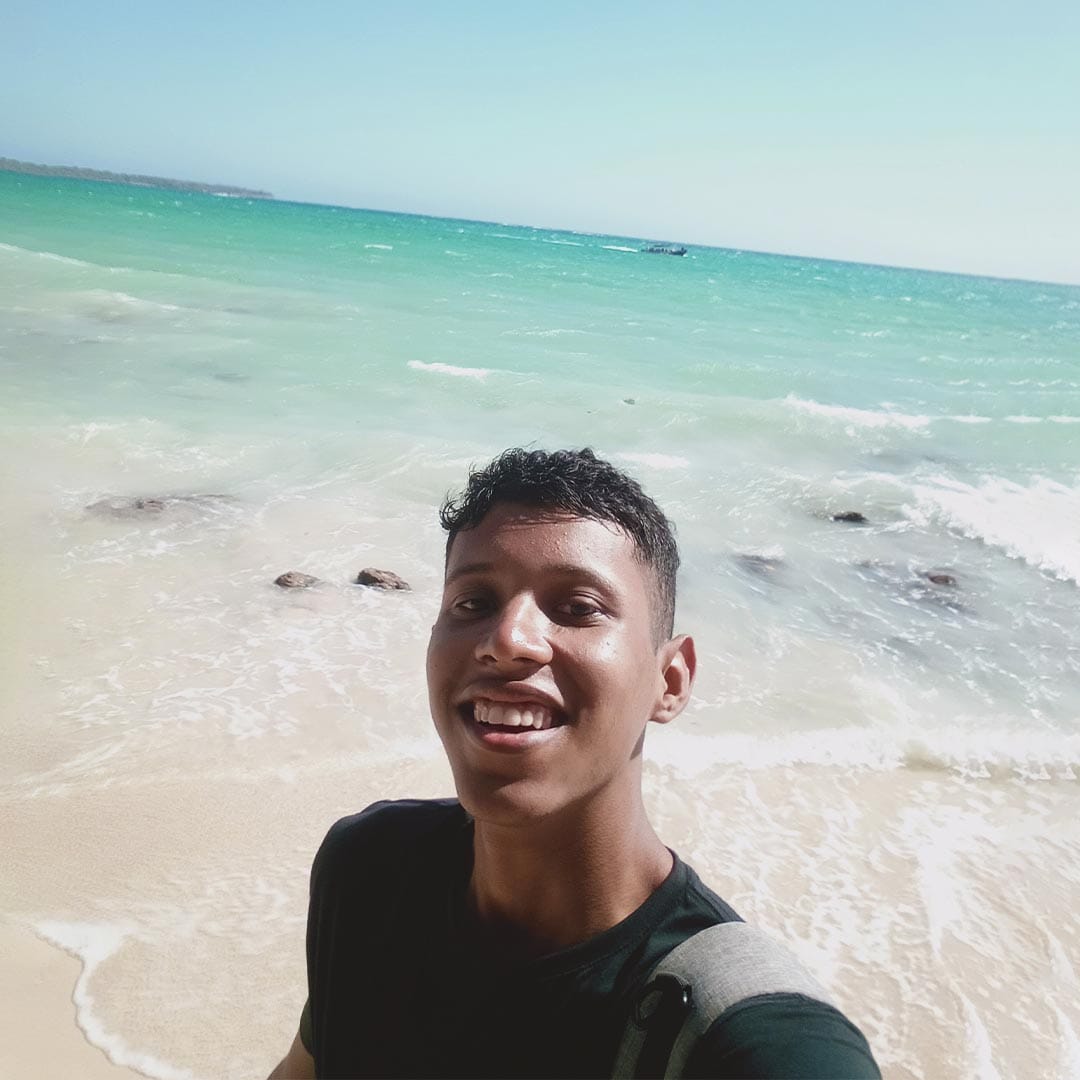
Almost a year ago I started recording videos hoping to win RevenueCat's Shipaton. I recorded them in Colombia and posted them on TikTok, explaining what Gurwi was and why I believed learning could feel different. The Spanish-speaking community answered with a warmth I still find hard to explain. One of those videos passed a million views without a cent spent on ads, and the Shipaton ended up giving us first place in the #BuildInPublic category and a $15,000 prize.
Gurwi has always been loved for what it wants to do, more than for what it was at the time. For me, that affection became an enormous responsibility. I made promises in those videos, and a lot of people put their hopes in this project.
An agent that builds the whole class
Since the Shipaton we have spent almost all our time building an agent that creates visual, interactive classes and courses from a single sentence. You ask for “the French Revolution” or “how compound interest works,” and Gurwi researches, writes, illustrates every scene, builds the interactive exercises and the questions, and narrates the class aloud.
Today it does things that a year ago existed only in my head. The two that move me most answer a need I had myself as a kid.
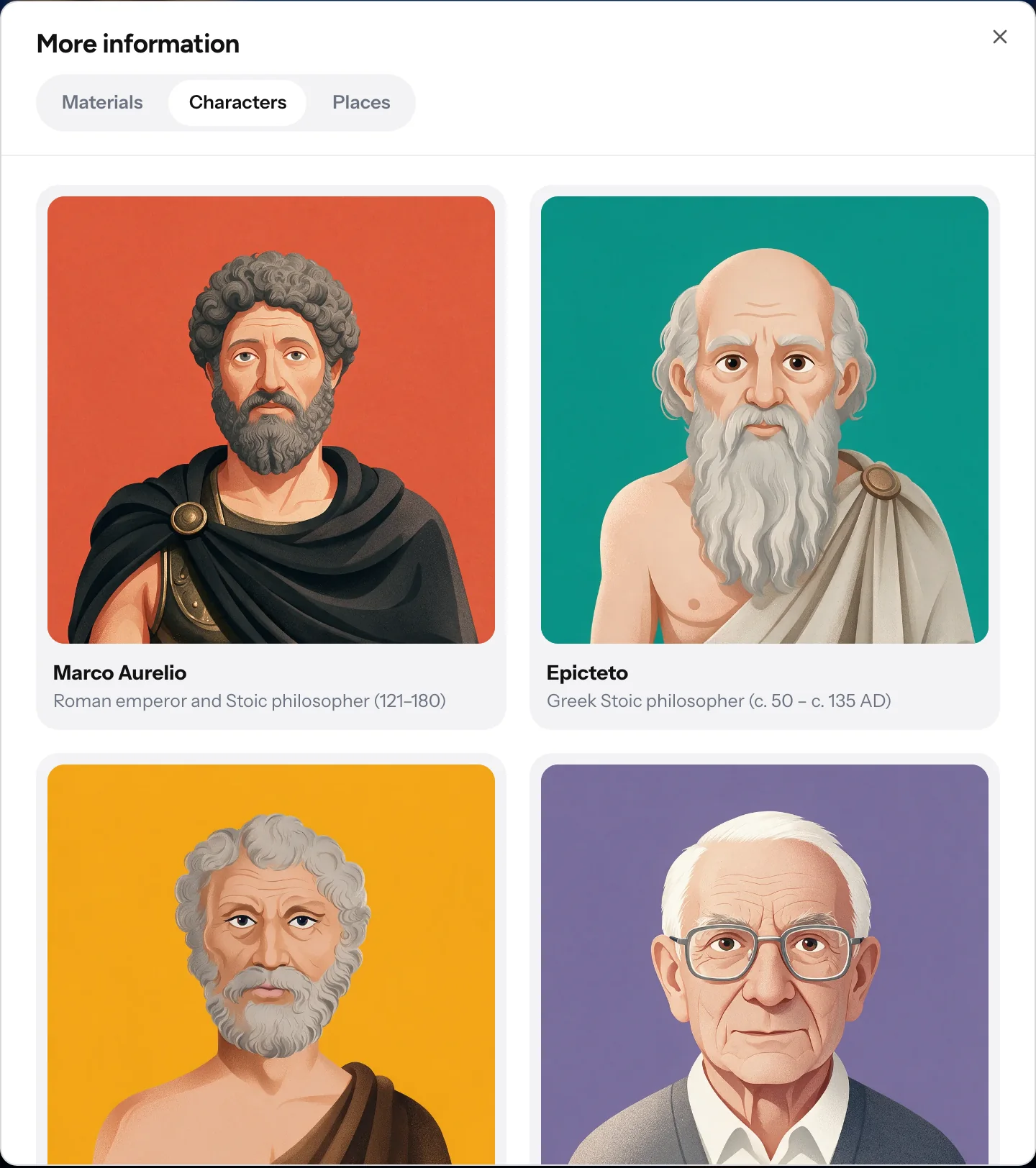
Characters with a face and a story
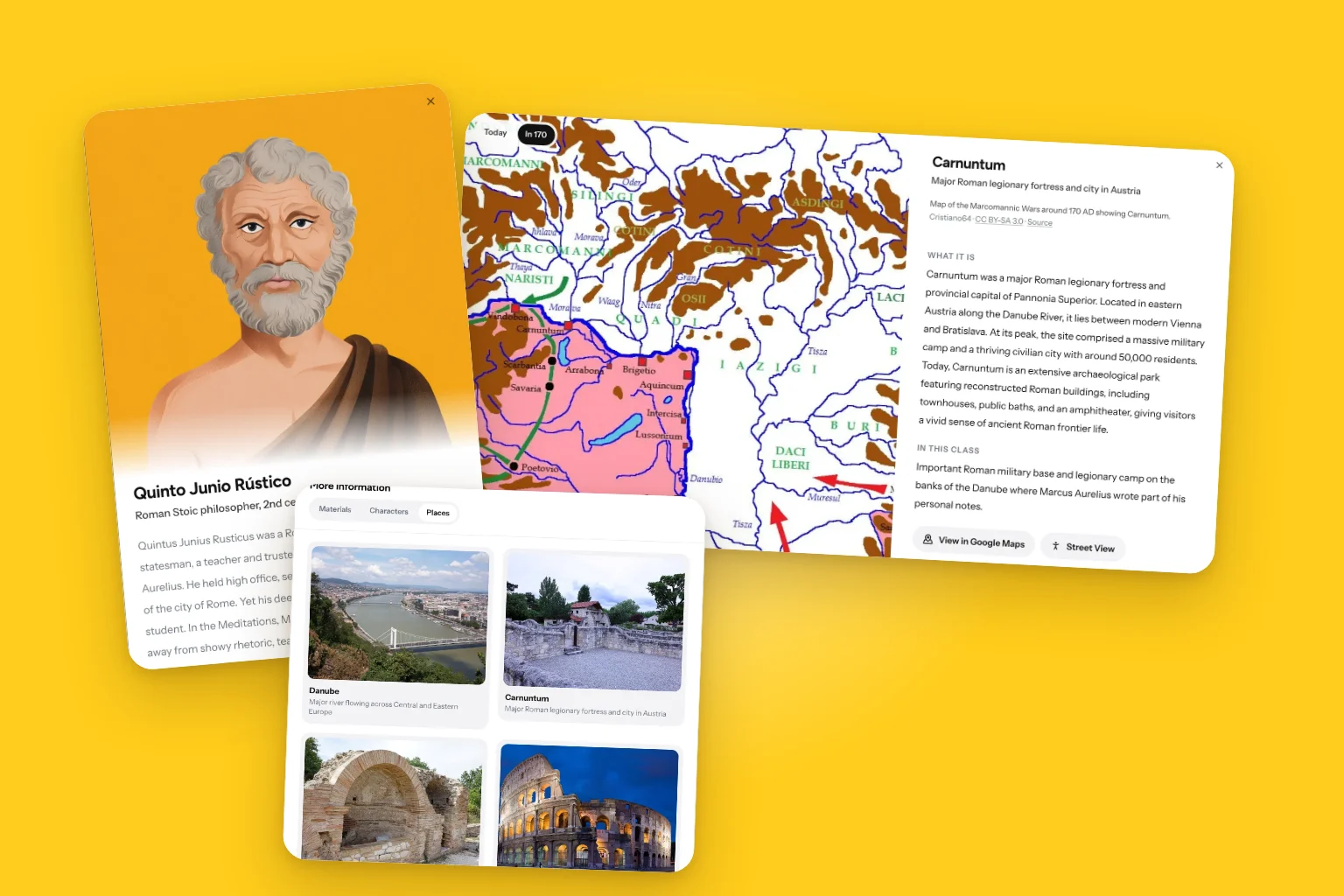
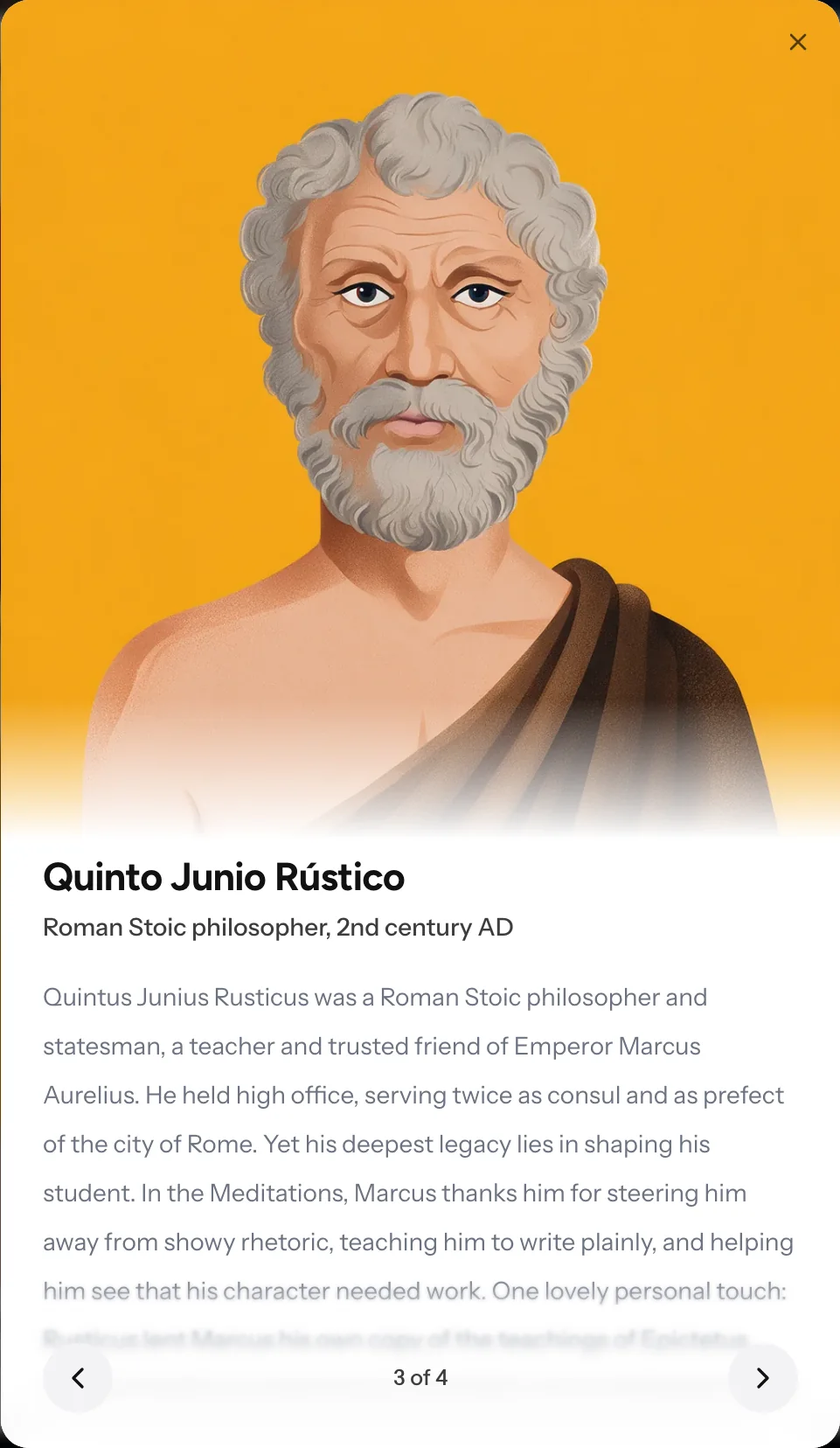
Whenever a class mentions a historical figure, Gurwi looks them up, creates a portrait of how they looked and writes their story. The class on Marcus Aurelius features him, Epictetus, the historian Pierre Hadot and a name almost nobody knows, Quintus Junius Rusticus. His profile says he was consul twice and prefect of Rome, though the deepest mark he left was on his student. In the Meditations, Marcus Aurelius thanks him for teaching him to write simply and for lending him his own copy of the teachings of Epictetus.
The names appear underlined in the text, so you can tap any character, read who they were and go back to the class without losing the thread.
Places you can find on the map
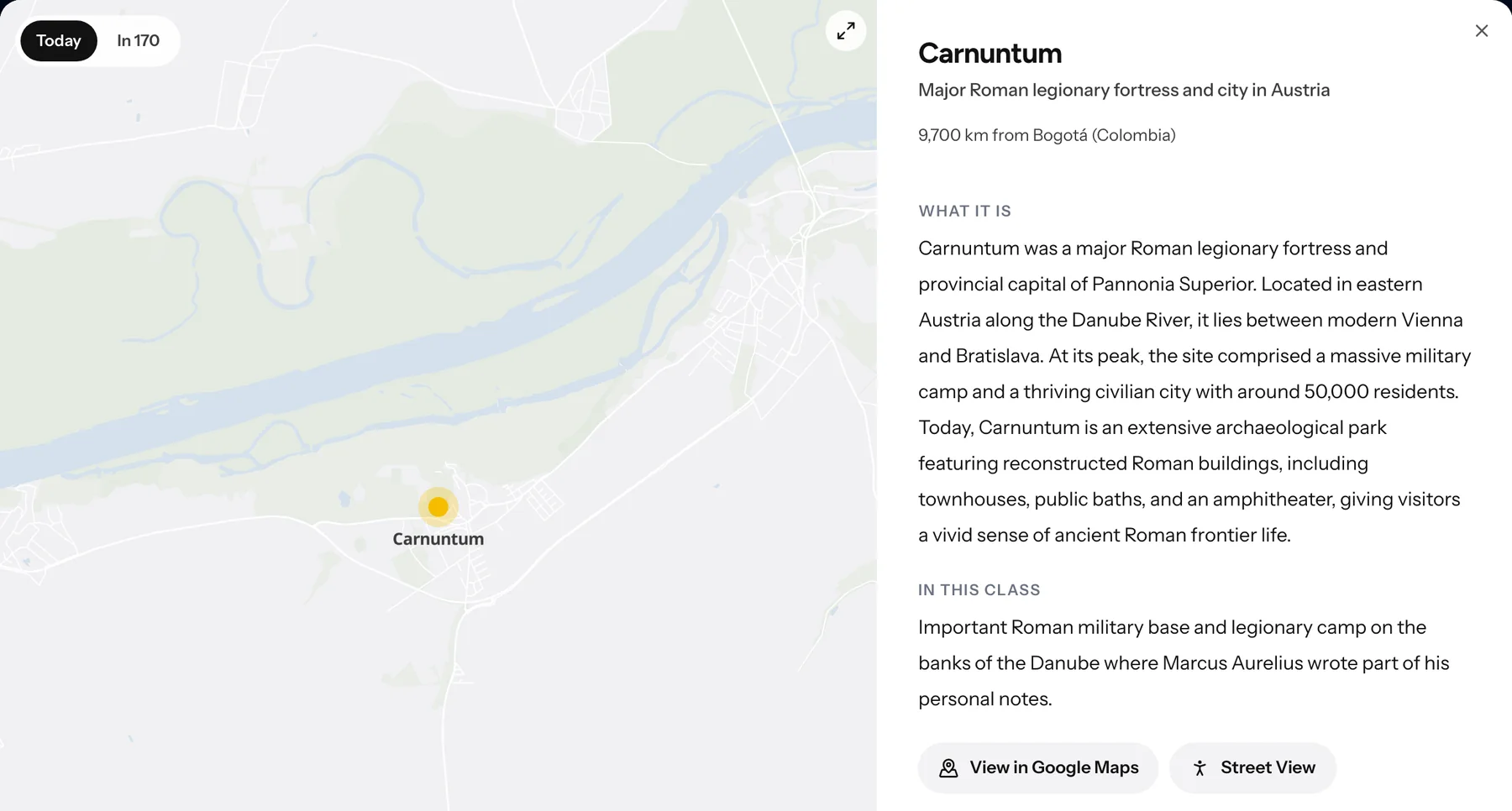
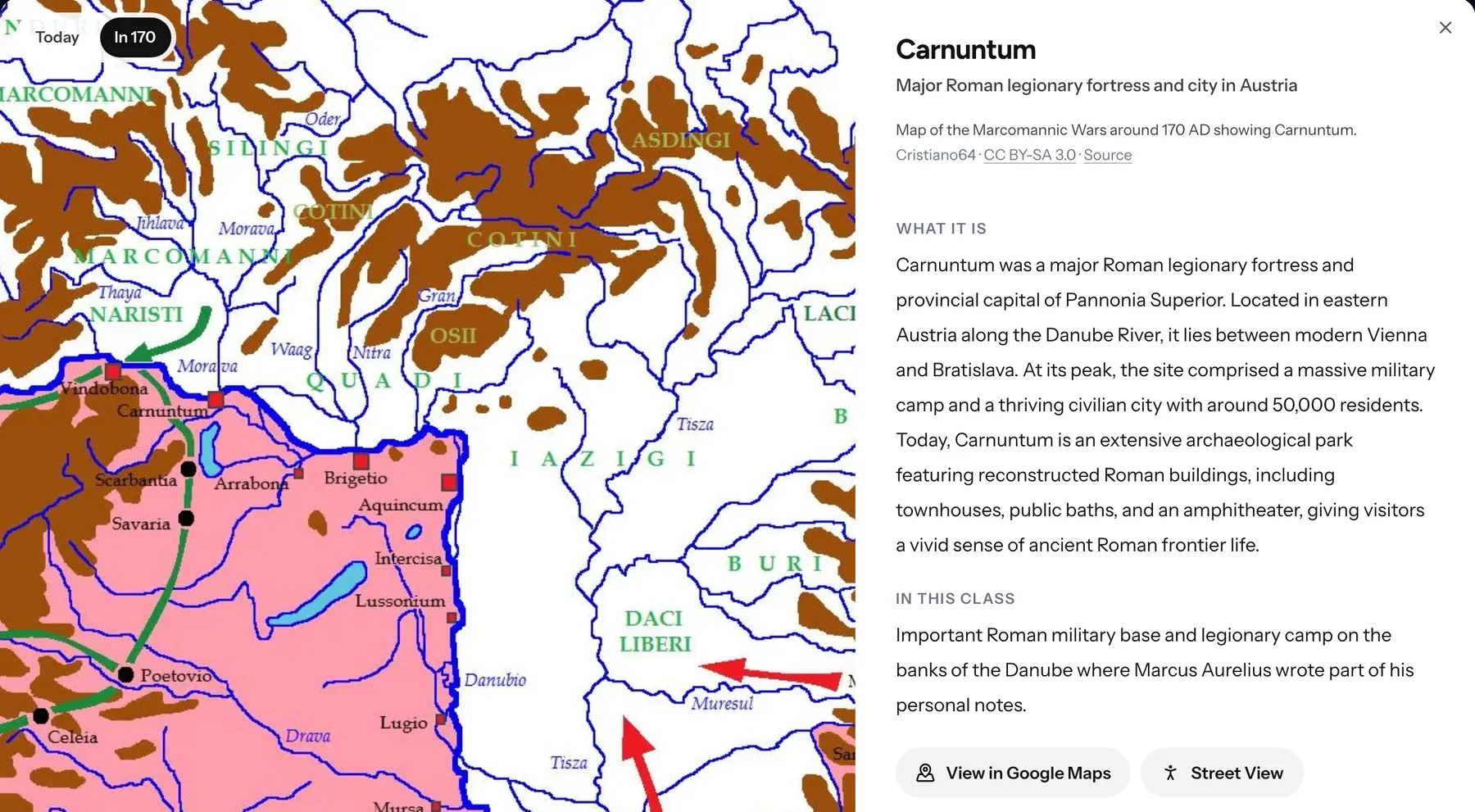
The same goes for places. When a class mentions a location, Gurwi puts it on a map, shows real photos, explains what it is and the role it plays in that class, and tells you how far it is from your country. Carnuntum, the Roman fortress on the banks of the Danube where Marcus Aurelius wrote part of his notes, lies 9,700 kilometers from Bogotá. One button swaps today's map for one from the period, and there Carnuntum sits on the edge of the empire, facing the Marcomanni and the Quadi, around the year 170.
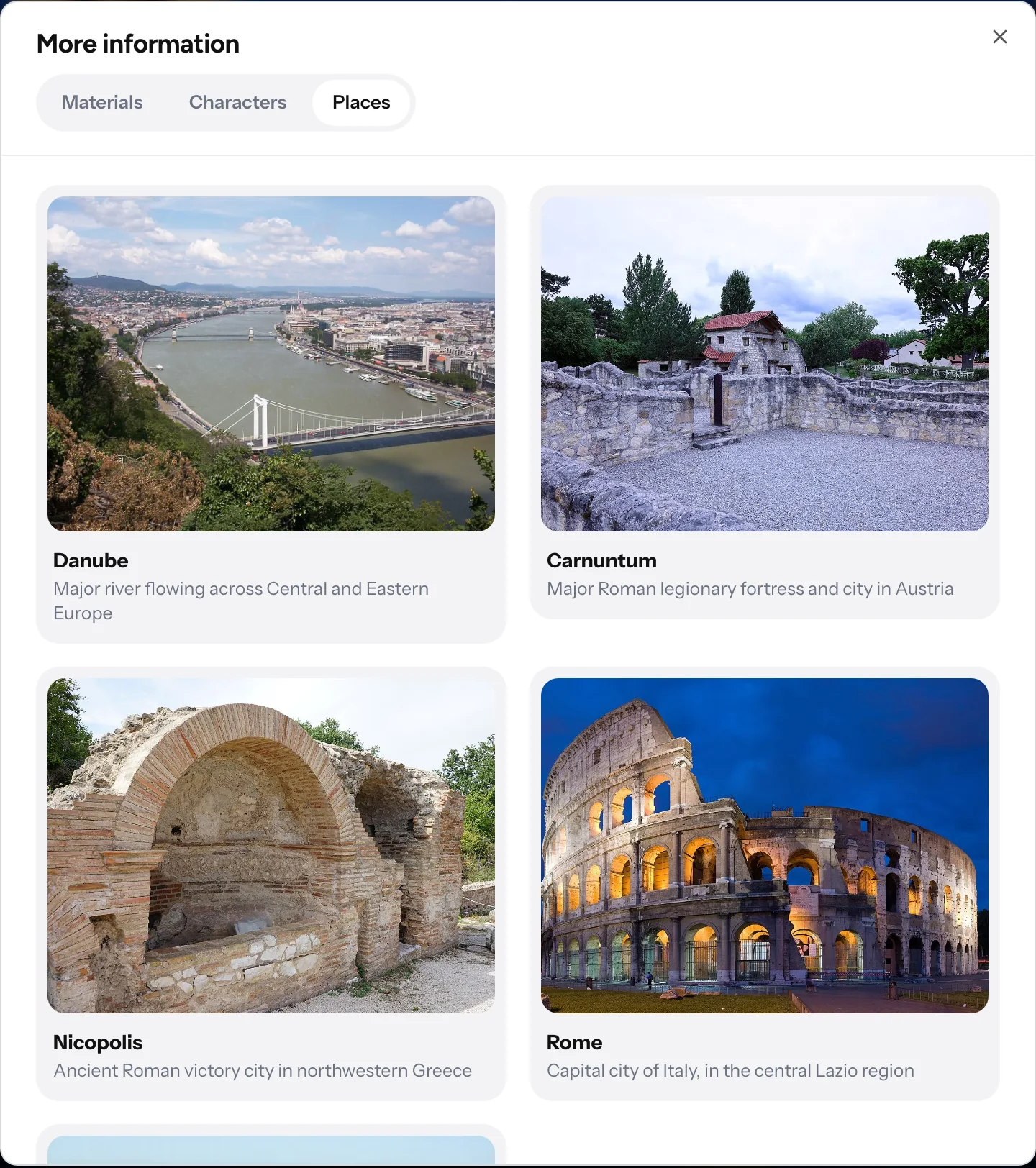
The photos come from Wikimedia Commons and public-domain archives, always with their author and license. And if you want to go further, every place opens in Google Maps and Street View. Characters and Places are in the iPhone and Android app and on gurwi.com, under “More information” in every class.
Why this matters so much to me
Some of you already know this. I finished high school in Colombia's second-poorest department and came to reading late, through Ernst Gombrich's A Little History of the World. I fell in love with the way it was written, telling a young reader the story of humankind as if the author were sitting right beside him. But my copy had no pictures. For someone who didn't know where Mesopotamia was or what the Fertile Crescent was, those pages were hard going. I wanted to learn, but I needed to see.
Gurwi is the tool I wish I'd had. A tool for any child who can get access to it and for any young person who wants to understand the world better, in their own language and from their own country.
What comes next
I can say it with certainty now. From here on we will publish new classes every week. I'm also going back to what I was doing a year ago, sharing Gurwi and helping more people find it.
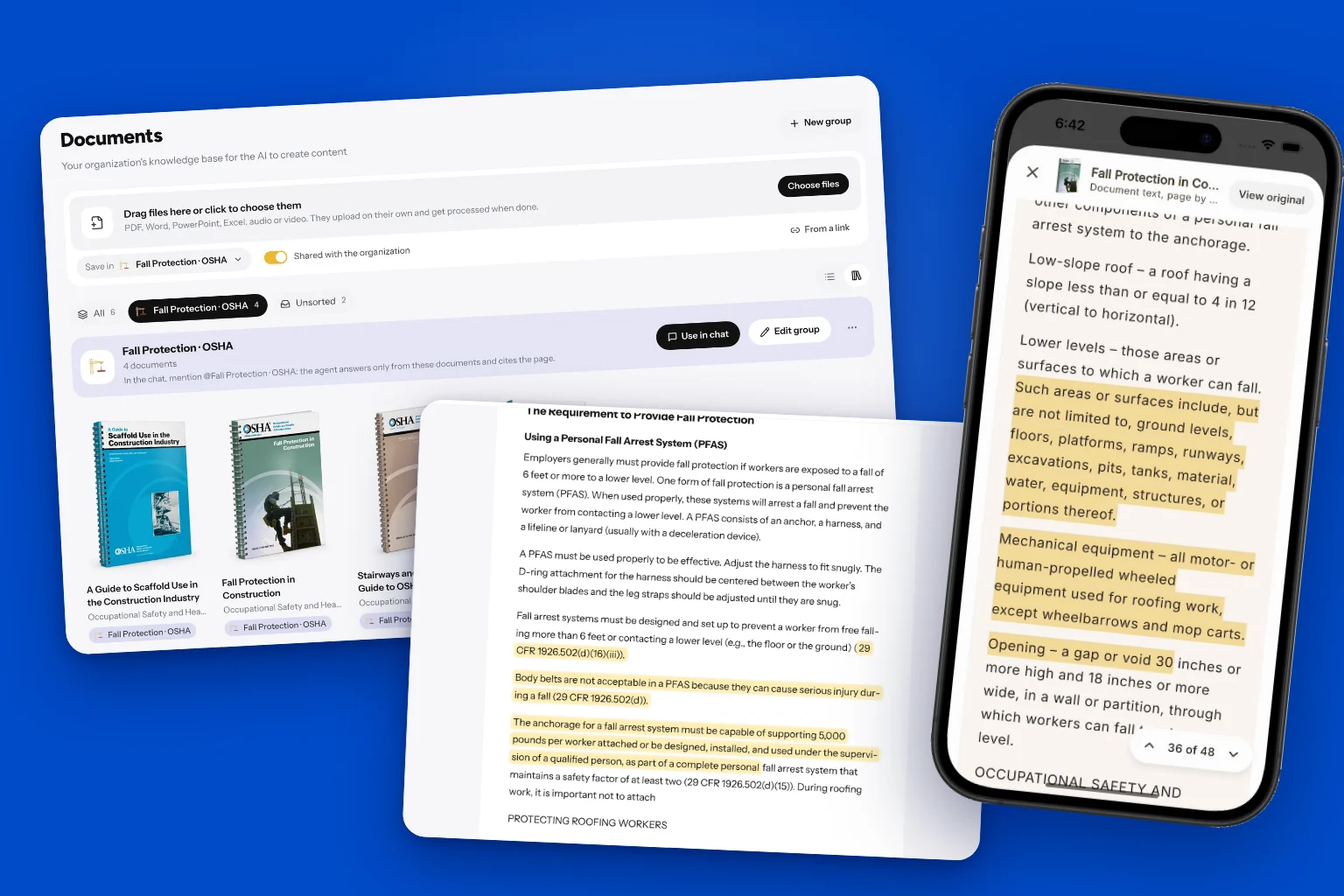
And there is something else I'm very excited about. The same technology that creates these classes turns a company's manuals into courses its team actually finishes, and lets schools and universities create material for their students in minutes. If you'd like to bring it to your organization, Gurwi for business and Gurwi for schools and universities explain how to get started.
What this technology does still surprises me every time I open a new class. It took us time, and there is still work ahead, but soon the world will know.