
The opening whistle: lineup and disparity on the field
The opening whistle: lineup and disparity on the field
Cartagena de Indias, March 1741. Imagine a football match where the rules have been broken. On one side of the pitch stands the heavy favorite, a superpower with a star-studded lineup ready for a blowout. On the other, a modest local team, physically depleted, with no substitutes on the bench, forced to park the bus to withstand the onslaught. This is no exaggeration: the disparity of forces in the siege of Cartagena de Indias is one of the greatest military imbalances in naval history.
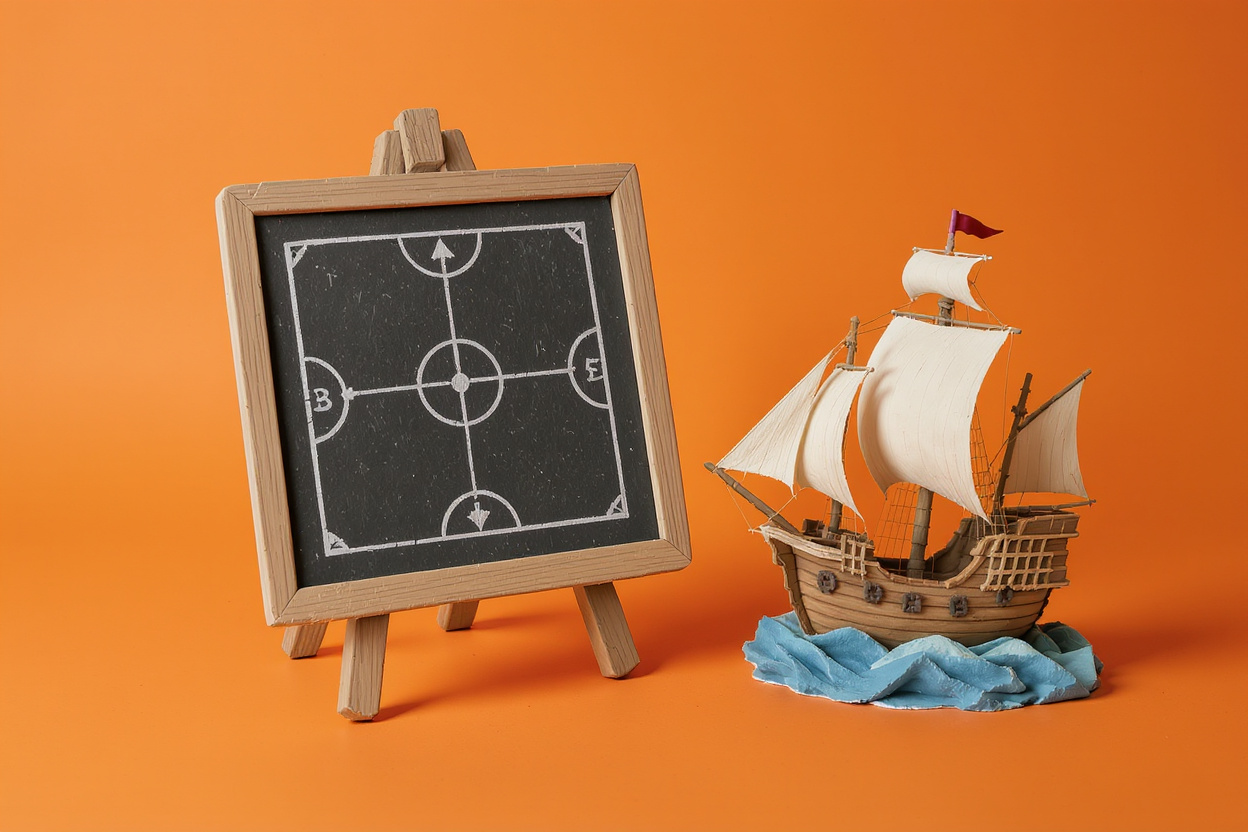
The British Admiral Sir Edward Vernon commanded a massive fleet of 186 ships and around 27,400 men. It was the military equivalent of starting the world's best forwards in a hyper-offensive formation. On the other side, the Lieutenant General of the Spanish Navy, Blas de Lezo—nicknamed the "Half-Man" because he had lost a leg, an eye, and an arm in previous battles—led a defense of just 6 ships and between 3,000 and 4,000 defenders.
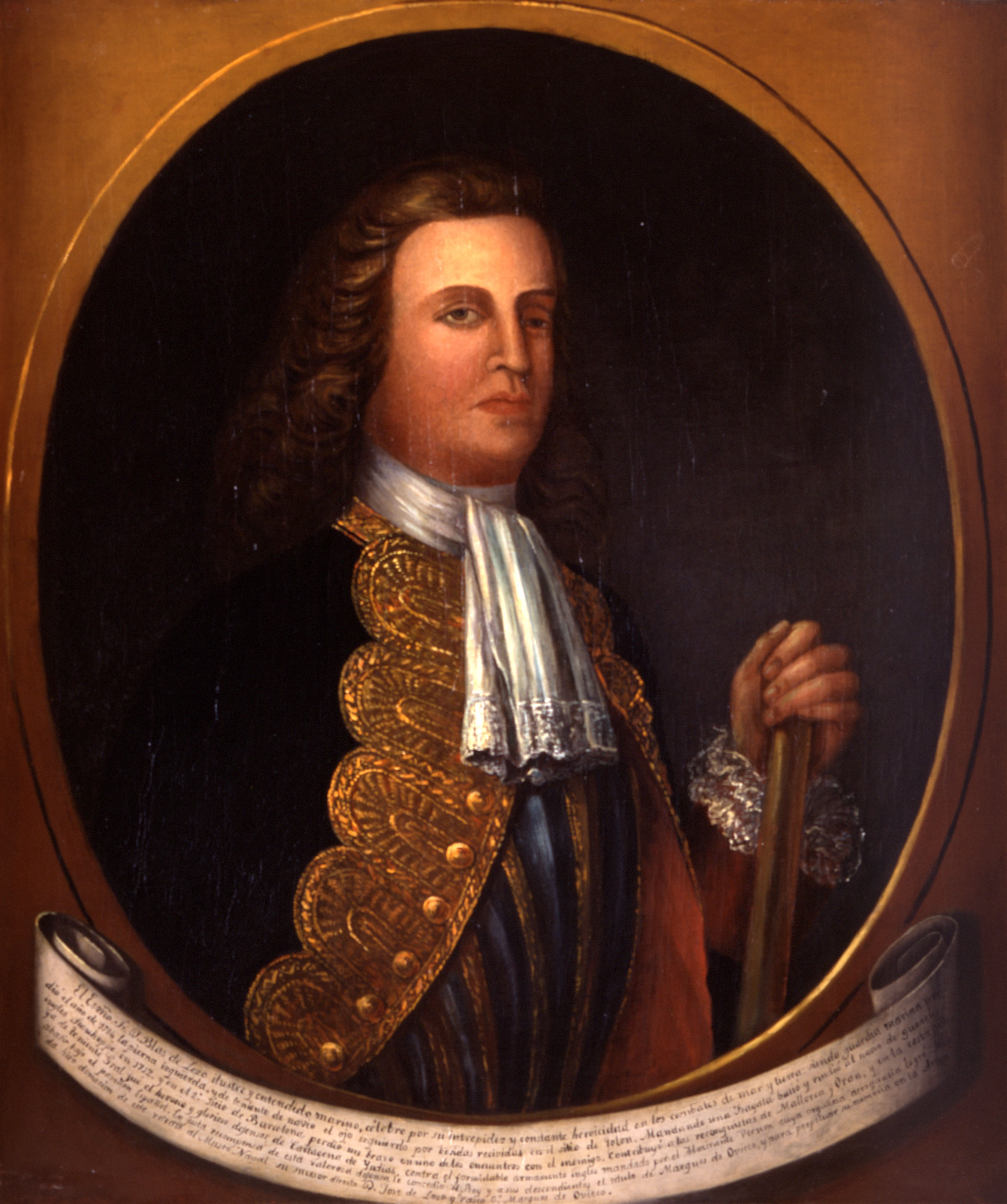
In sports jargon, Lezo's initial tactic was clear: drop deep, close the spaces, and wear down the opponent. Playing with a squad of 3,000 defenders against an attack of over 27,000 required precision tactical discipline. Any positional error would mean a historic thrashing that would open the gates of Spanish America to the British Empire.
| Attribute / Force | British Side (Attack) | Spanish Side (Defense) |
|---|---|---|
| Warships | 186 vessels | 6 ships of the line |
| Initial strength | ~27,400 men | ~3,000 to 4,000 men |
| Main strategy | All-out assault and rapid siege | Line of containment and attrition |
The Catenaccio tactic: Blas de Lezo's defensive deadlock
To stop an infinitely superior opponent, you cannot play an open game head-to-head. Blas de Lezo applied what in modern football is known as Catenaccio: an ultra-disciplined defensive deadlock designed to frustrate the opponent's attacking play through layered containment lines. In the Caribbean terrain, these lines were the forts and access channels to the bay of Cartagena.
The defense was structured as a system of suffocating marking. The Bocachica channel was the first line of defensive midfielders. There, the San Luis forts and supporting batteries had to slow down the entry of Vernon's fleet. Lezo sacrificed four of his ships in this channel, deliberately sinking them to block the path of the British ships. It was the equivalent of parking the bus in front of the goal to block any direct shot.
- The Bocachica Deadlock (1741)
- Understand Blas de Lezo's maneuver to block the only deep-water access to the bay of Cartagena.
- Blocking Strategy
- Active Defense
- Bocachica block progress
- S. Luis
- S. José
- Dragón
- Conquistador
- S. Carlos
- Vernon's Fleet
- TOWARDS INNER CARTAGENA
- CARIBBEAN SEA
- WAY BLOCKED!
- Strategic Effect:
- The ships control the passage under supporting fire.
- The line holds. The forts support the position.
- Scuttling
- Lezo orders the ships to be scuttled to block the path.
- Total Deadlock
- Channel completely blocked. The draft prevents British passage.
This approach slowed down the British advance. Vernon wasted valuable play time and gunpowder trying to overcome each obstacle. In the tropics, the clock runs against the visitor: each day of delay allowed the heat, malaria, and scurvy to decimate the British lineup without needing to fire a single cannon. Extreme resistance did not seek the immediate destruction of the opponent, but rather their physical suffocation on the field.
Celebrating the goal too early: Vernon's hubris and the victory coins
In football, celebrating a championship at halftime usually ends in sporting tragedy. Edward Vernon made exactly that mistake. Upon forcing his way through Bocachica and entering the inner bay of Cartagena, the English admiral took the game for won. He sent a schooner back to London with a triumphant report announcing the imminent capture of the city.
Euphoria took over England. Enthusiastic citizens and merchants commissioned low-quality commemorative medals (made of Pinchbeck alloy) to celebrate the supposed victory before the siege had even ended. These propaganda pieces depicted Admiral Blas de Lezo on his knees, surrendering his sword to a victorious Vernon. The inscription read: "The Spanish pride pulled down by Admiral Vernon".
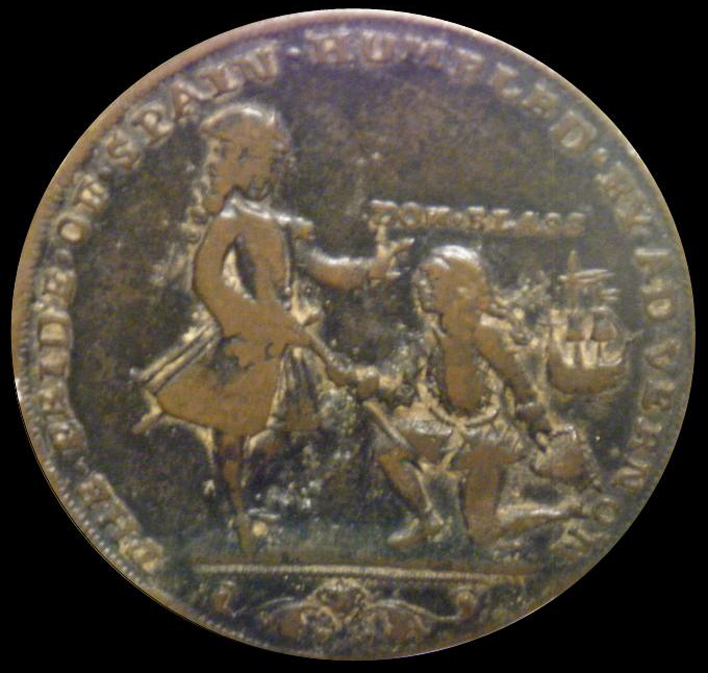
The British loss of focus due to their premature victory weakened their strategic rigor. Vernon underestimated the opponent's capacity to resist and the fatigue of his own men, setting the stage for a devastating tactical counterattack on the final line of defense.
The Battle of San Felipe Castle: the last-minute counterattack
Vernon's final assault was concentrated on the last defensive barrier: the imposing Castle of San Felipe de Barajas. To storm its walls, the British designed a direct play strategy using scaling ladders. However, in a masterstroke of engineering and local cunning, Blas de Lezo ordered a trench to be dug at the foot of the walls, increasing the effective height of the wall overnight.
When the British assault troops arrived at the foot of the castle under Spanish fire, they discovered to their horror that their ladders were too short to reach the battlements. The attack was completely frozen in the penalty box. At that moment of absolute enemy confusion, Lezo ordered a counterattack with fixed bayonets.
The defense's operations diary documents the desperation of the failed assault. The British disorganization, combined with the devastating outbreak of disease, transformed the offensive into a chaotic retreat to the ships. British casualties soared to an estimated 9,000 to 12,000 dead and sick by the end of the campaign, forcing Vernon to order the fleet's retreat and sealing the Spanish victory against all odds.
Tactical analysis: lessons from an impossible defense
The final whistle of the 1741 conflict reshaped the geopolitical balance of America. The Spanish victory in Cartagena de Indias secured the Crown's control over Caribbean trade routes and prolonged Spanish hegemony in the region for several more decades. Vernon had to return to England with his decimated fleet and an express prohibition from King George II against publishing or speaking about the military disaster.
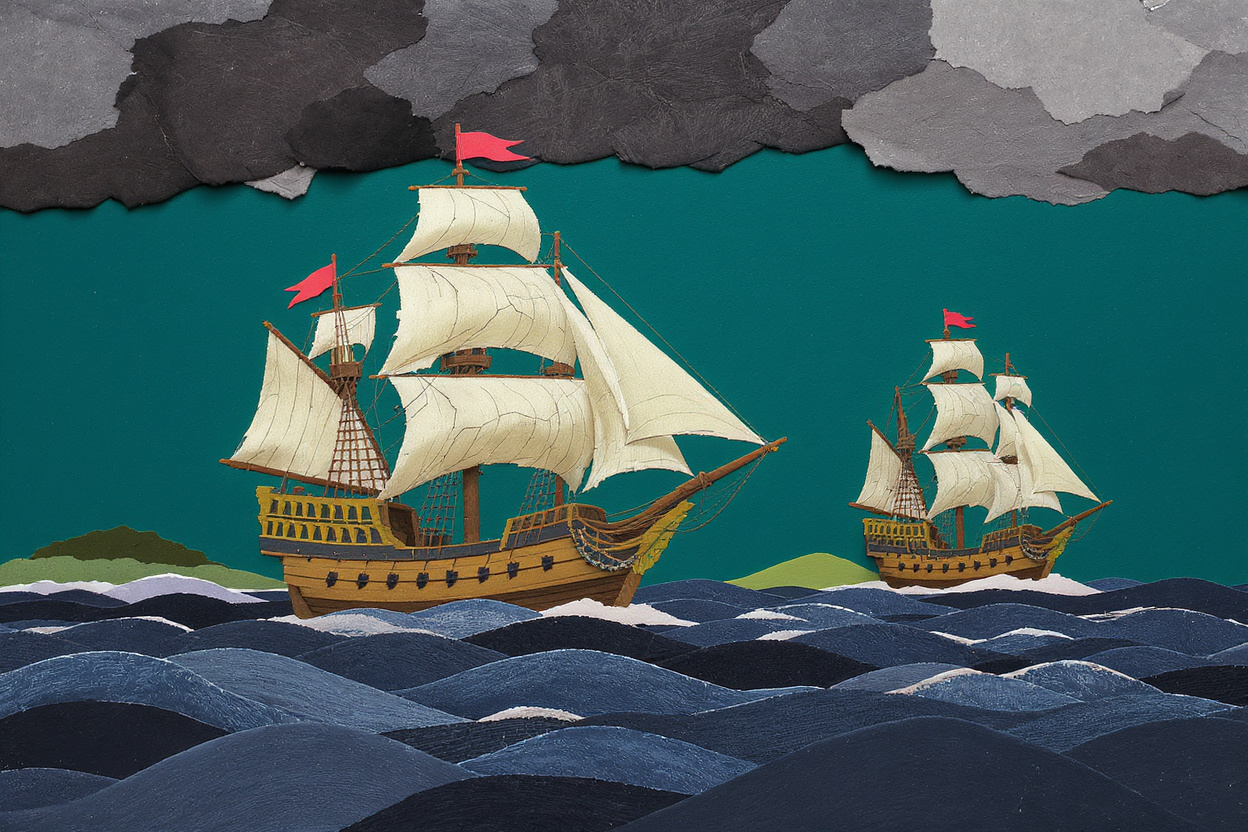
From a pure strategy perspective, the siege of Cartagena de Indias leaves us with three fundamental lessons applicable to both military defense and sports tactics:
- Planning compensates for disparity: The use of the terrain, forts, and channels allowed for balancing a numerical disadvantage of almost 9 to 1.
- Attrition is an active weapon: In adverse climates or prolonged matches, passive resistance consumes the physical and mental energy of the attacker.
- Hubris destroys execution: Celebrating a victory before the final whistle distracts the team and opens the door to devastating counterattacks.
Blas de Lezo proved that, in tactics as in football, the team that best reads the playing field and manages its scarce resources is the one that ends up lifting the cup.
Sources
References
- Naval History Magazine: The siege of Cartagena de Indias of 1741 and the balance of casualties on both sides.
- Diary of everything that occurred in the expunging of the forts of Bocachica and siege of the city of Cartagena de Indias (1741 Edition).
- Vernon's Medals: the story of the English victory that never happened in Cartagena de Indias.