

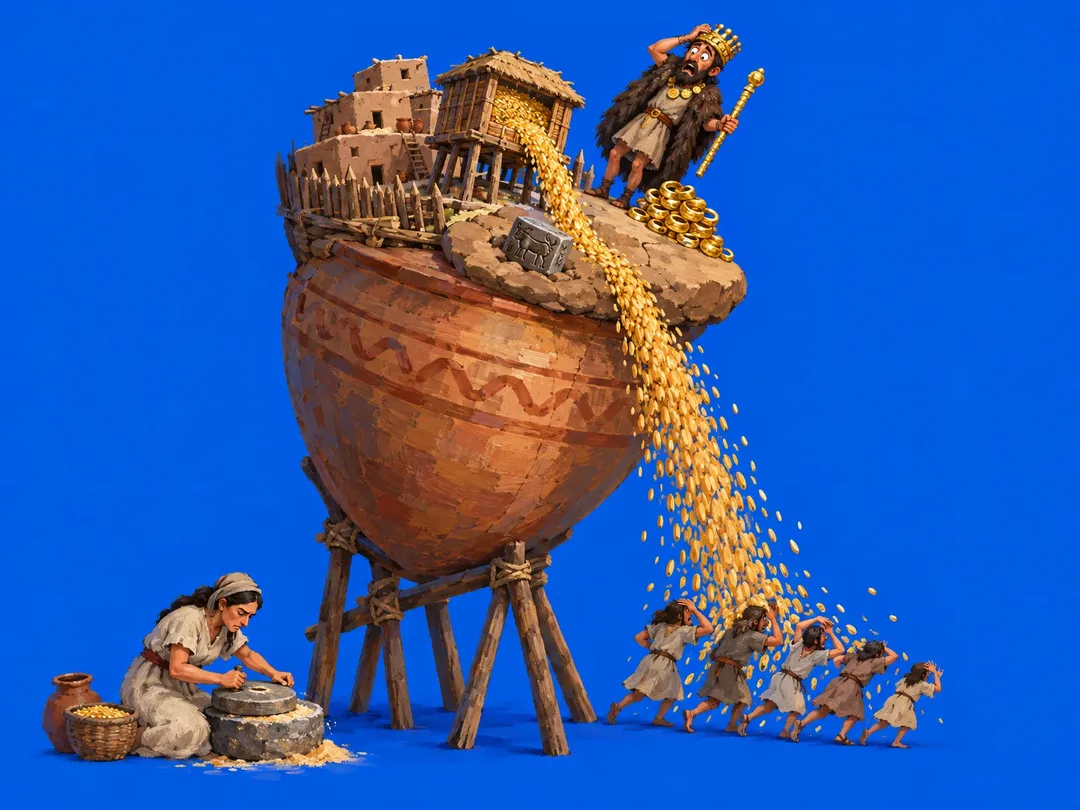
The trap of the first grain
Imagine a woman in Abu Hureyra, a village along the Euphrates River in present-day Syria, about 10,000 years ago. She spends hours on her knees in front of a flat stone, pushing another stone back and forth to grind cereal. Her toes stay folded under her body to support the push. Archaeologists have found that women's skeletons from that village show severe arthritis in the big toes, worn knees, and crushed vertebrae, exactly the injuries left by that posture repeated day after day.
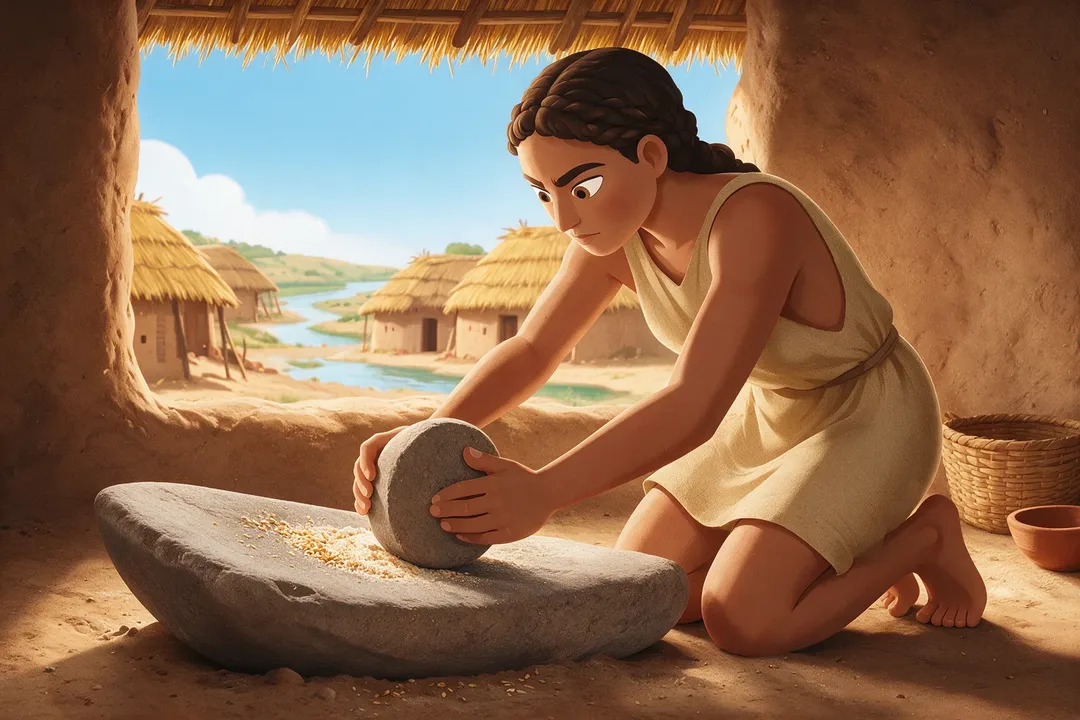
That scene refutes a widespread idea: that farming was a relief. The first agricultural communities had a less varied diet, based on cereals, and worked in a more repetitive way than the hunter-gatherer groups that moved across the landscape. In many places, the first farmers were shorter and had more cavities, more infection lesions, and more enamel stress marks on their teeth, signs that as children they suffered from hunger or illness. In Çatalhöyük, a large village in Anatolia, almost all the people studied showed defects in their canine enamel.

So why did agriculture catch on? The answer lies in births. With stored food and without having to carry babies from one camp to another, women spent less energy and could get pregnant more often. Cereal porridges made early weaning possible, and that shortened the time between one child and the next.
- Camp of a nomadic band that moves to a new location every generation
- Nomadic band
- One birth every
- 3.5 years
- Reach adulthood
- people
- Village of adobe houses by the Euphrates River that grows with every generation
- Cereal village
- 2 years
- Generation
Each child faced more risks in a crowded village with dirty water and animals nearby. Even so, so many more children were born that populations grew. Specialists summarize the result as a demographic advantage with unequal health: there were more people, although many lived worse than their foraging ancestors.
The silo invents property
A hunted deer is eaten in a few days; a handful of berries, in hours. A sack of dry wheat, on the other hand, lasts for months. That seemingly small difference changed human life. In Dhraʿ, in the Jordan Valley, about 11,300 years ago, the inhabitants built granaries with raised floors to ventilate the grain, even before plants were fully domesticated. They stored wild or intensively cultivated cereal.
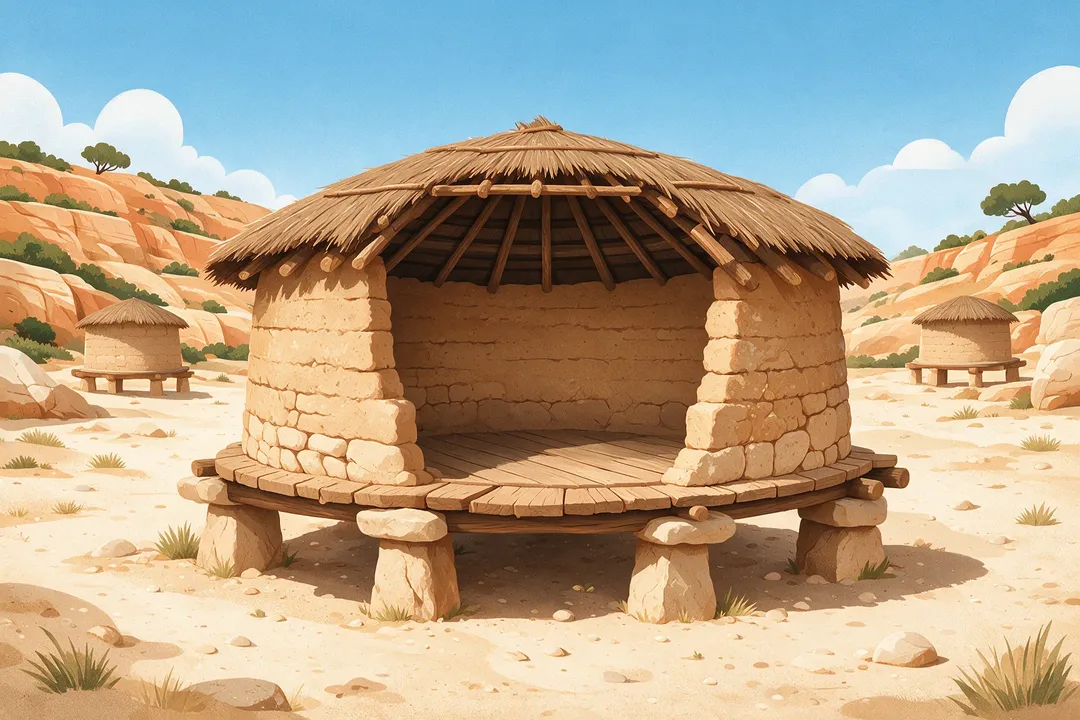
Those early granaries were in central spaces, separate from houses. Building them required collective labor, and their size indicates that the entire community managed them, not just a single family. Stored grain initially united people.
Over time, storage moved. About 10,500 years ago, storage entered houses, and by some 9,500 years ago many villages had rooms dedicated to storing food. In Çatalhöyük, each family stored its grain in its own dwelling. When the reserve is behind someone's door, a new idea appears about who the food belongs to.
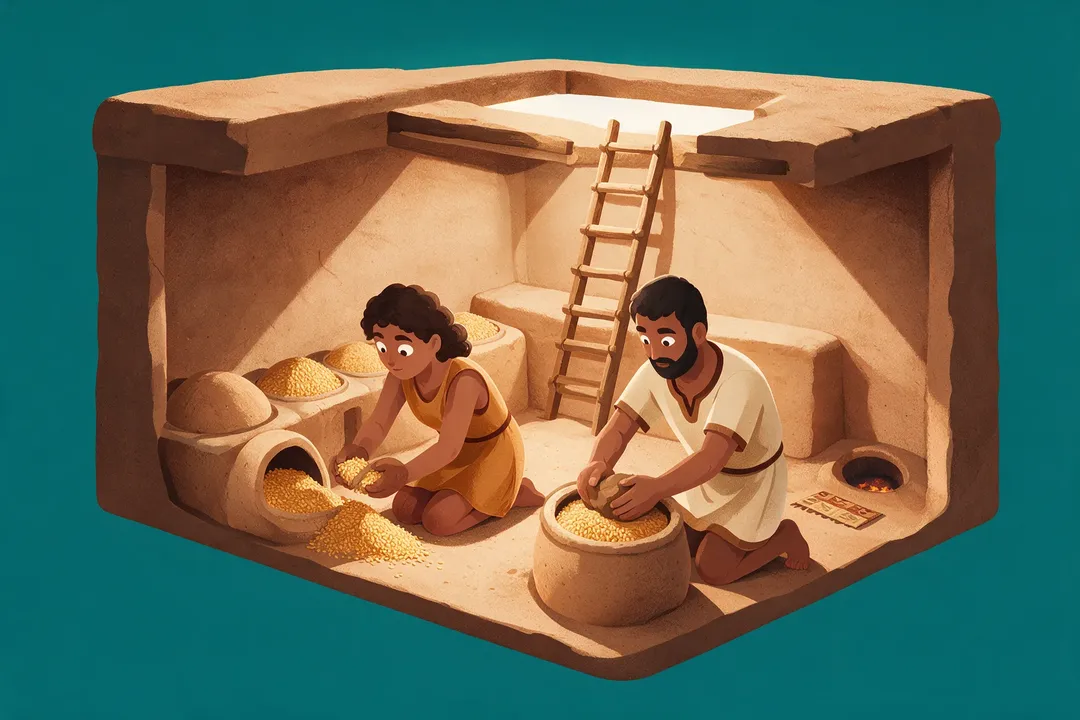
Grain also tied people to the land. Whoever had invested months in a field and filled a silo could not leave with the next season. The fixed village, the worked field, and the accumulated reserve formed a package worth defending.
A similar process occurred on other continents with other grains. Rice in the Yangtze Valley and maize in Mexico were also harvested in one season and stored for the rest of the year. That shared trait, rather than the specific plant, made grain a wealth that could be accumulated.
- A hunter camp with meat and berries spoiling in a few days, alongside the communal granary at Dhraʿ with its raised floor, where grain stays intact for months
- Day
- Time elapsed
- days
- months
- Berries
- Meat
- Grain
- Dhraʿ
- Month
| Trait | Foraging bands | Cereal villages |
|---|---|---|
| Main food | Hunting and varied wild plants | Wheat, barley, rice, or maize |
| Food duration | Days | Months |
| Mobility | Moving camps | Permanent houses |
| Reserve | Little or shared | Communal silos and later family ones |
The division of labor in the village
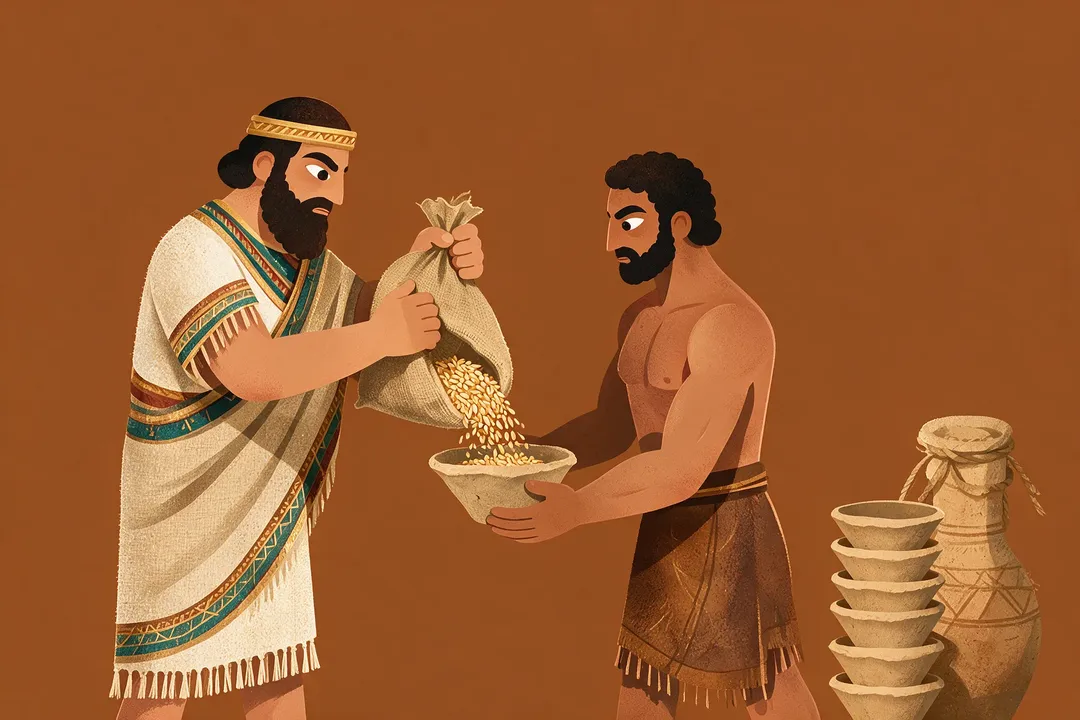
A family that only produces what it eats cannot afford to have one of its members spend the day shaping pots. Surplus changes that equation. If the fields yield more grain than the village consumes, some people can do something else and receive food in exchange.
In Uruk, in southern Mesopotamia, that mechanism operated on a large scale by the fourth millennium BCE. Temples and other large institutions collected the harvest, stored it, and handed out fixed portions to those who worked for them: field laborers, builders, administrators, and artisans. Since these people did not need to grow their own food, they could work full-time in metallurgy, pottery, or construction.
The object that best sums up this system is a humble one. In Uruk, archaeologists have found huge quantities of crude, mass-produced bowls with beveled rims and similar capacity. Many researchers believe they served to measure each worker's barley ration. Coins did not exist, so grain functioned as payment.
The interpretation is influential, but not certain. Some bowls may have been used to bake bread or for other purposes, and specialists still debate their exact measurements. What is clear is the scale: millions of rations left the storehouses of the institutions.
Alongside the artisans arose other occupations that did not produce food. The warriors who protected the reserves, the priests who presided over the rituals, and the scribes who kept the accounts all depended on the same granary.

- Uruk village: three farmers harvest barley and take it to the temple storehouse. From there, bevelled-rim bowls go out with a ration for each person. The more each farmer harvests, the more bowls are left over and the more people work without farming: potter, metalworker, guard, builder, scribe, and priest.
- Harvest per farmer
- 1 ration
- 2 rations
- 3 rations
- Farmers
- Temple storehouse
- Potter
- Metalworker
- Guard
- Builder
- Scribe
- Priest
Who ate from the granary without sowing
- Potters: made the containers used to store and distribute grain.
- Metalworkers: worked copper for tools and prestige items.
- Warriors: protected the fields and silos from neighbors.
- Priests: organized rituals and, in many places, temple administration.
Who holds the granary key
In ancient villages, a granary had no metal lock. It had something more ingenious: a lump of wet clay over a jar lid or a door latch. An official pressed it with his seal, a stone carved with a unique design. Anyone who wanted to open it had to break that mark, so everyone would notice that someone had gotten in.
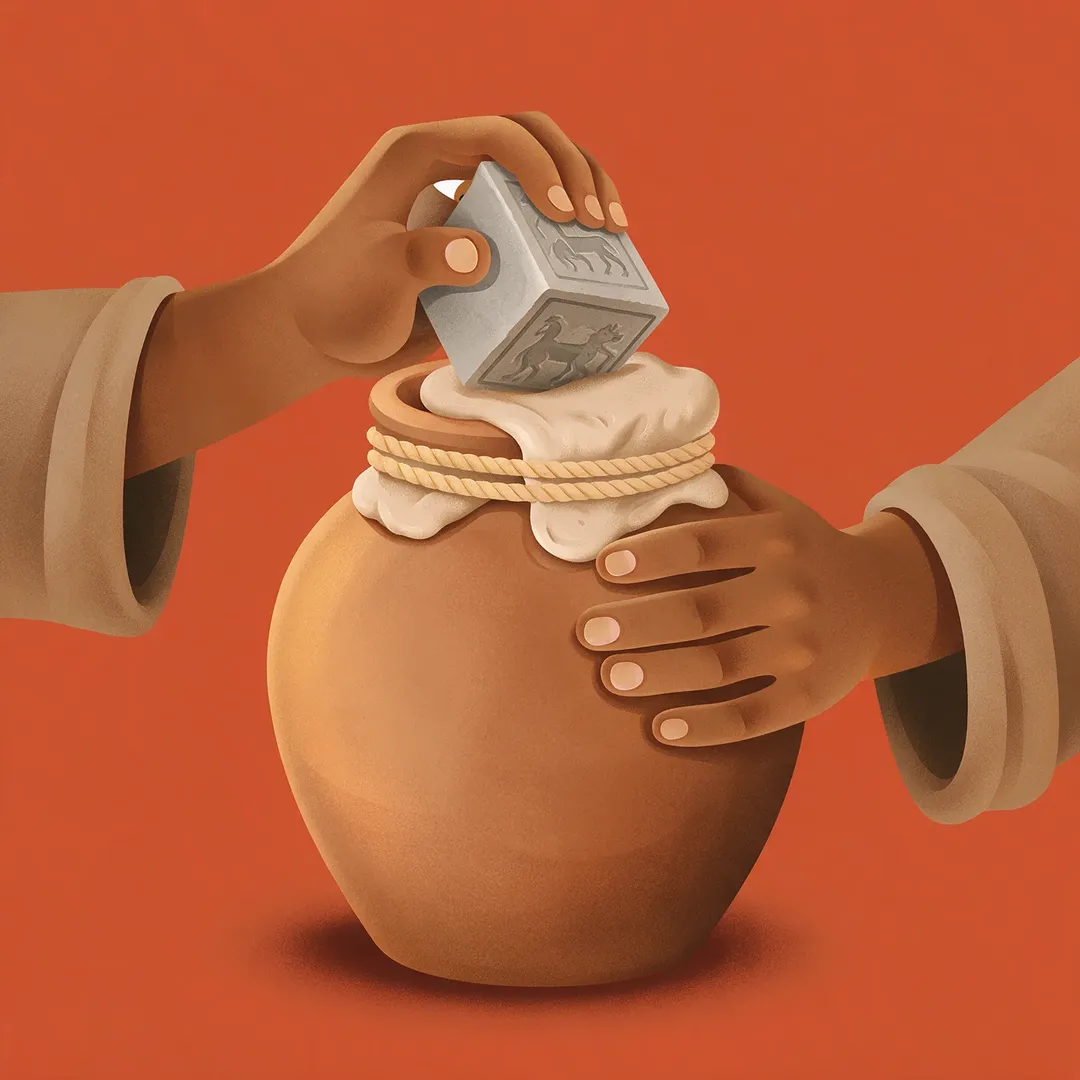
The seal acted like a signature. It identified the person or institution authorized to open, deliver, or receive grain. Thus, a reserve that the community had filled came to depend on who held the right seal.
In Tepe Gawra, in northern Mesopotamia, seal impressions concentrate in elite buildings, especially in the large complex known as the White Room, rather than spreading among common houses. Archaeologists read this as proof that a chief and his family held special privileges over what was stored. In Arslantepe, in eastern Anatolia, administrators piled up broken seals by type of transaction, and those heaps left a record of each distribution.
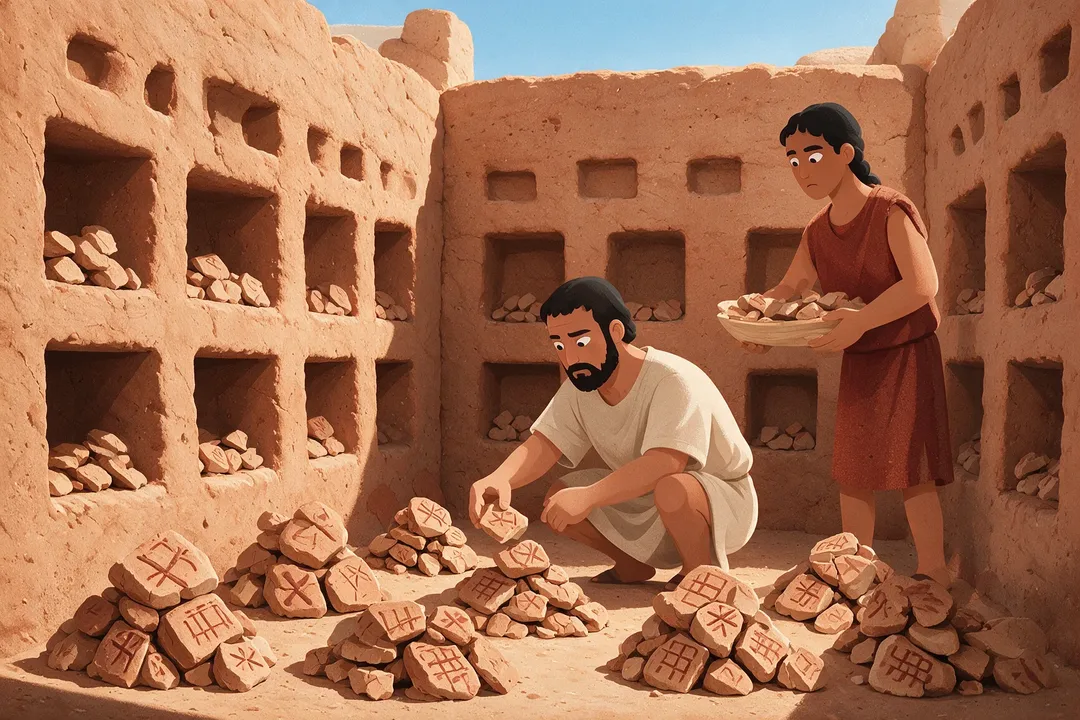
That record of who delivered what to whom eventually gave rise to writing. Here, power is what matters. Whoever decides when the granary opens and how much each family receives controls the lives of everyone who depends on that food.
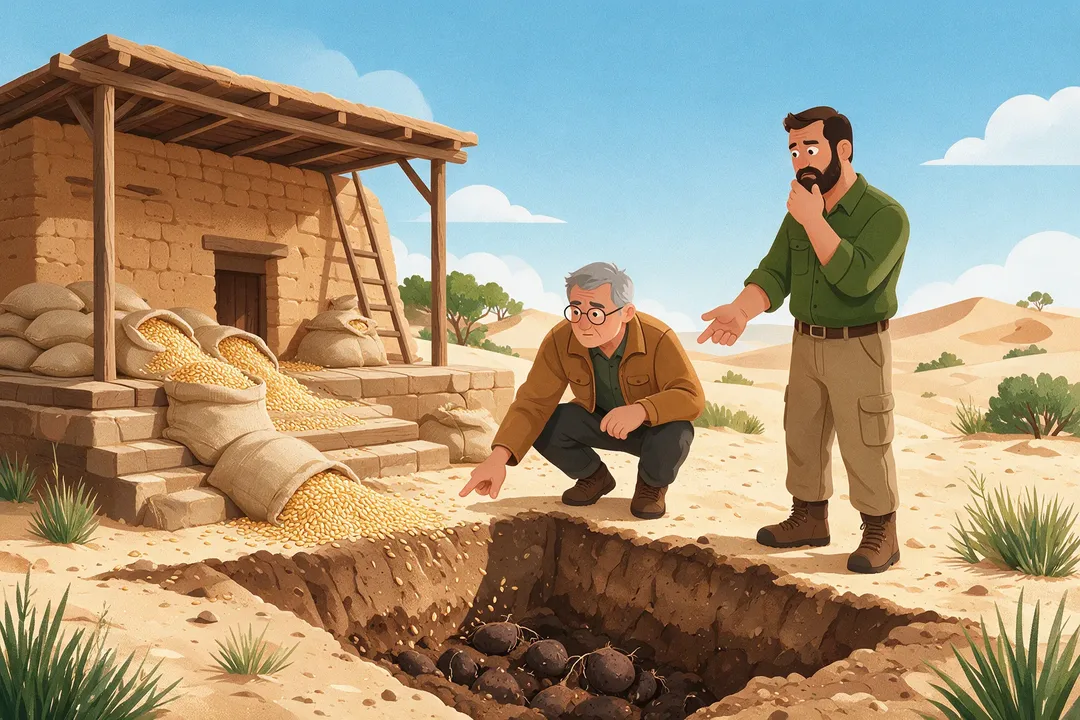
Economists Joram Mayshar, Omer Moav, and their colleagues proposed an explanation for why grain favored chieftains. Grain is harvested all at once, concentrated in one place, and easily measured, making it simple to confiscate as tax. Tubers like yams or cassava can stay underground until needed, making them harder to find and tax. According to their study, hierarchies were more likely to emerge where grain yielded far more than tubers. This is a debated hypothesis, not a universally accepted conclusion.
Inequality is etched in bones
In 1972, workers digging a trench near Varna, on the Bulgarian coast of the Black Sea, stumbled upon gold objects. They had found a cemetery used between 4560 and 4450 BCE. More than 3,000 gold pieces turned up there, about 6 kilos in total. What stood out was not the quantity, but the distribution: a few graves held almost all the gold, while many had nothing.
Tomb 43 belonged to an adult man buried with more than a kilo of gold, ornaments, and a weapon or scepter coated in the same metal. Beside him, other graves contained little more than pottery or simple tools. Some rich graves did not even contain a body: they honored someone important with gold and clay masks. Scepters and ceremonial weapons suggest that this wealth was accompanied by political or religious authority.

Bones tell another part of the story. Archaeologists compare height, cavities, injuries, and signs of childhood stress among people buried in the same village to find out who ate better and who worked harder. They also analyze bone chemistry. The proportion of a certain type of nitrogen reveals how much meat a person ate over the years.
In Oslonki, Poland, those buried with copper ornaments had a bone chemistry different from that of the others, a sign that for years they ate different foods or foods from different lands, perhaps from better pastures. However, their nitrogen levels were not higher, so the evidence does not prove that the elite ate more meat. In many Central European villages, the dietary difference between groups was small.
- Cemetery map: graves with gold and poor graves, their bones, and each person's nitrogen
- Level of analysis
- Grave goods
- Height
- Teeth
- Nitrogen
- no body
- more meat
- similar
The conclusion of the specialists is both firm and cautious. No single piece of evidence proves an elite existed, but deeply unequal graves, houses of different sizes, huge silos, and special buildings point together to differences in wealth and power. And inequality did not follow the same path everywhere.
From palisades to the first kings
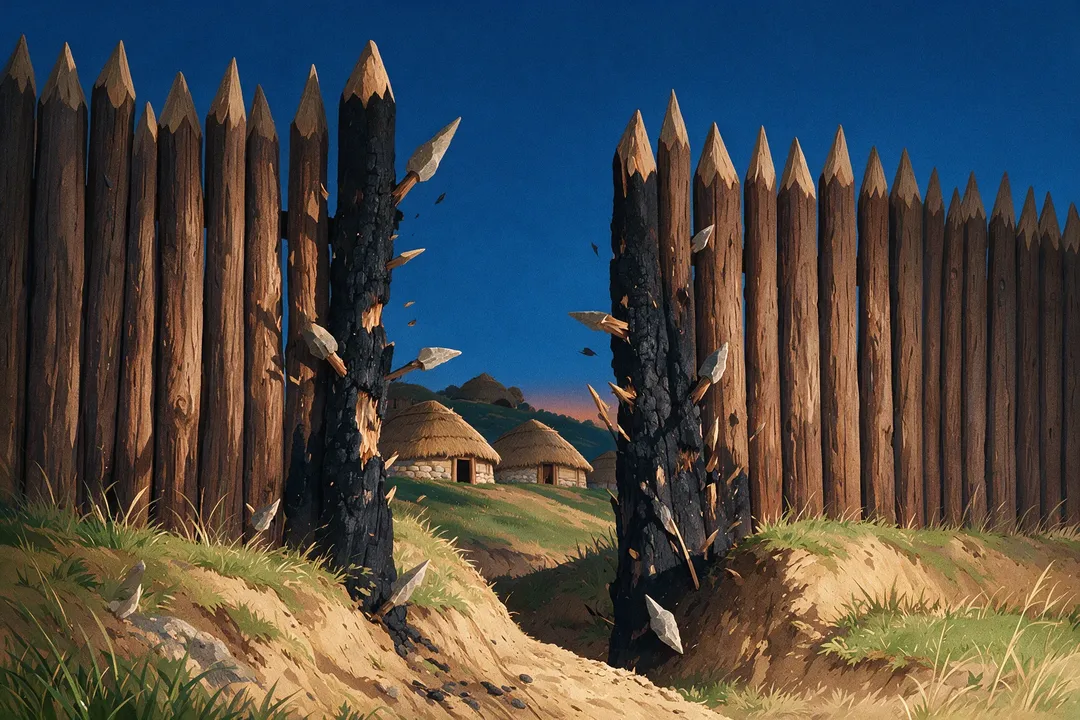
A full silo attracts hungry neighbors. For this reason, farming villages began surrounding themselves with ditches, log palisades, and enclosures, and later moved to easily defendable hills. Building these defenses required organizing many people under some form of leadership.
Palisades were not merely decorative. In several Neolithic enclosures in Great Britain, flint arrowheads pile up near fences and especially at entrances, a sign that someone fired upon those defenses. In Basly, Normandy, burned fences turned up with arrowheads around them. In Talheim, Germany, a pit held dozens of men, women, and children beaten to death. In San Juan ante Portam Latinam, in the Basque Country, arrow wounds are abundant, and researchers see evidence of organized, prolonged conflict there.
Warfare created a need and also an opportunity. The community needed someone to coordinate defense, and that someone could demand grain in exchange for protection. According to Mayshar's hypothesis, stored grain generated both the demand for protectors and the means to pay them, and the leaders who controlled that grain were able to make their position hereditary.
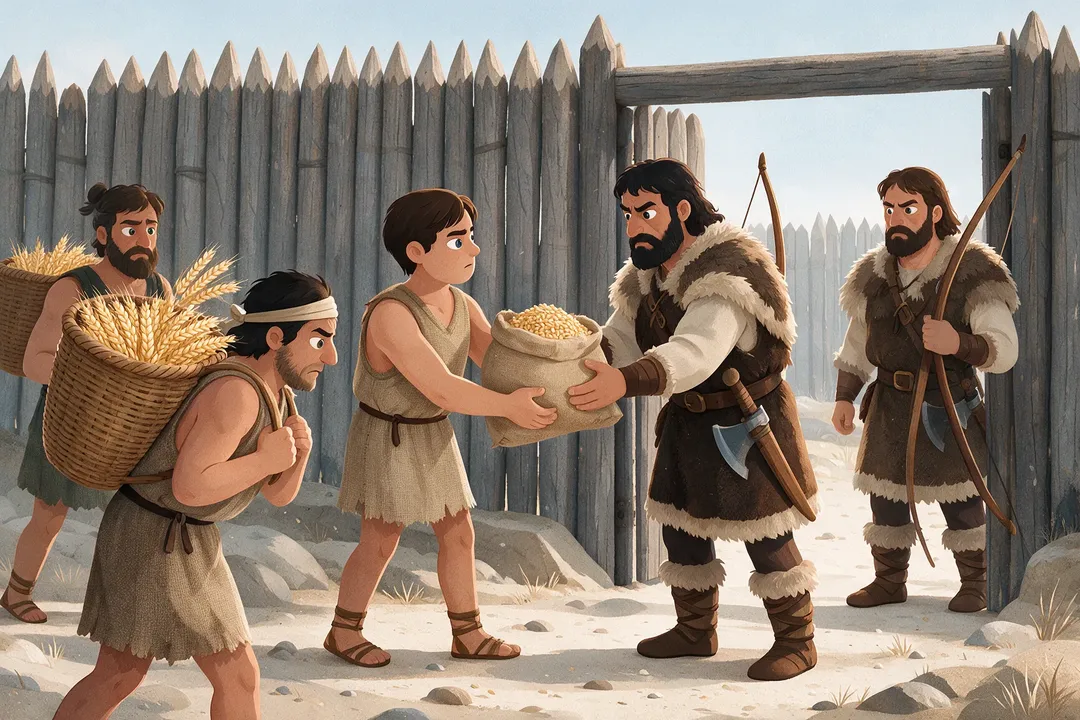
Archaeology supports the connection, but with limits. Fortified settlements tend to occupy high ground and contain prestige objects, and they may have been residences of chiefs. No one has identified a Neolithic “warrior chief” by name. Specialized warriors appeared gradually, especially toward the end of the Neolithic period.
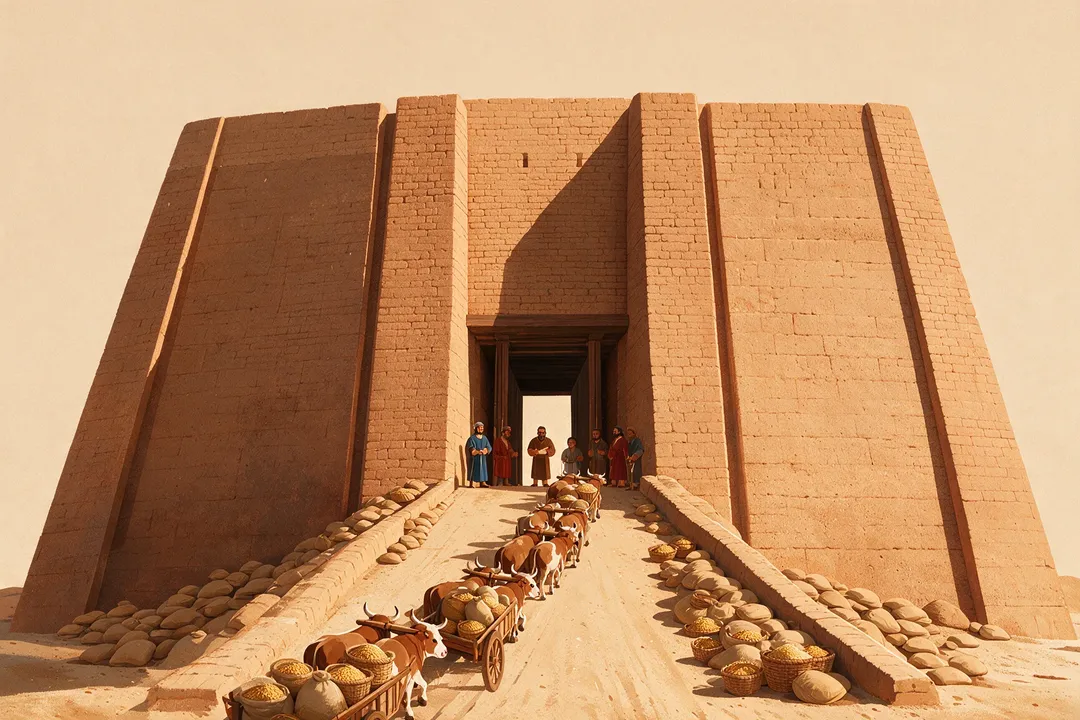
Centuries of change separated the leader chosen for an emergency from the chief who inherited his office. At the end of that road stood the kings of Mesopotamia, Egypt, and the Andes, rulers who distributed rations from fortified storehouses. In Tell Brak, Syria, a massive warehouse with walls roughly nine meters thick already showed that grain had become a matter of state.
What tipped the scales
The first cereal villages offered a two-sided deal. Thanks to stored grain, more children were born, towns grew, and crafts emerged that no one could previously afford. With it also came knees worn out from constant grinding, doors sealed with mud, and tombs full of gold alongside others that were nearly empty.
None of that happened overnight or in the same way everywhere. The earliest granaries in Dhraʿ were the work of a cooperating community. Hierarchy became lasting when the reserve fell into the hands of a few families, when someone guarded the seal, and when the defense of the silos justified a permanent chief. Those grain rulers, with their storehouses and accounts, shaped the world's first civilizations.
- Map of Dhraʿ, Çatalhöyük, Uruk, and Tell Brak
- The same grain passes from the communal granary to the home, the seal, and the walled palace
- Who guards the grain
- The village
- The family
- The seal
- The palace
- Dhraʿ
- Çatalhöyük
- Uruk
- Tell Brak
- 9 m
Sources
References
- The Eloquent Bones of Abu Hureyra - Geoff Bond
- Bioarchaeological Reconstruction of Gender Roles in Early Agricultural Societies of the Near East — 2014
- Bioarchaeology of Neolithic Çatalhöyük reveals fundamental ... — 2019
- Early agriculture’s toll on human health - PMC — 2019
- Explaining the Neolithic Demographic
- Multi-proxy stable isotope analyses of dentine microsections reveal diachronic changes in life history adaptations, mobility, and tuberculosis-induced wasting in prehistoric Liguria (Finale Ligure, Italy, northwestern Mediterranean) — 2020
- Reproductive trade-offs in extant hunter-gatherers suggest adaptive mechanism for the Neolithic expansion — 2016
- Explaining the Neolithic Demographic Transition - PMC
- Fifteen thousand years of bioarchaeological data reveal life history trade-offs among Europe’s first farmers — 2026
- Skeletal Growth Impairment and 6000 Years of Gradual ... — 2016
- Evidence for food storage and predomestication granaries 11,000 years ago in the Jordan Valley — 2009
- The Neolithic Revolution in the Middle East - Allen - 2024 — 2024
- Coevolution of farming and private property during the early Holocene — 2013
- Economy and Writing - University of New Mexico
- Short Teaching Module: Bevel-Rimmed Bowls — 2025
- Uruk period - Wikipedia — 2005
- Beveled rim bowl - Wikipedia — 2012
- An Ancient Analogy : Pot Baked Bread in Ancient Egypt and Mesopotamia. — 2008
- [PDF] After the Uruk - BAR Publishing
- Expedition.qxd
- 1
- The development of centralised societies in Greater Mesopotamia and the foundation of economic inequality — 2017
- Different Trajectories in State Formation in Greater Mesopotamia: A View from Arslantepe (Turkey) — 2018
- mmnp_6_oct_2019.dvi
- Cereals, appropriability, and hierarchy - CEPR — 2015
- Study sheds new light on the origin of civilisatio
- Researchers Have a Controversial New Hypothesis For How ... — 2022
- The Archaeology of Inequality — 2022
- Varna Necropolis
- Varna and the social context of early metallurgy | Antiquity | Cambridge Core — 2026
- Archaeology Magazine - The New Upper Class
- Rags-to-Riches. Reflections on Knowledge, Resources and ...
- Varna Necropolis - Wikipedia — 2005
- S0003598X20001027jra 932..947
- 4000 years of human dietary evolution in central Germany, from the first farmers to the first elites — 2024
- Cover Page
- Household storage, surplus and supra-household storage in prehistoric and protohistoric societies of the Western Mediterranean
- Cultural evolution and societal transformation in the ... — 2026
- “But some were more equal than others:” Exploring inequality at ... — 2024
- Prehistoric Warfare | Oxford Bibliographies in Military History — 2012
- Archaeopress Publishing Ltd Summertown Pavilion 18-24 Middle Way Summertown Oxford OX2 7LG www.archaeopress.com
- War Before Civilization The Myth of the Peaceful Savage
- More News — 2024
- Warfare in the European Neolithic: Truth or Fiction? — 2022
- Conflict, violence, and warfare among early farmers in Northwestern ... — 2023
- Archaeology in Mesopotamia: Digging Deeper at Tell Brak
Audiovisual sources
- File:Cuneiform tablet- administrative account of barley distribution with cylinder seal impression of a male figure, hunting dogs, and boars MET DT847.jpg — The Metropolitan Museum of Art, Wikimedia Commons · CC0
- File:Grave 43 (Varna Archaeology Museum) (36755886415).jpg — Gabriele Burchielli from Seville, Spain and Italy, Wikimedia Commons · CC BY 2.0
Frequently asked questions
Why did early farming make people less healthy than hunter-gatherers?
Early farmers ate a narrower, grain-based diet and did more repetitive work than foraging groups. Many were shorter and had more cavities, infection lesions, and enamel hypoplasia marks, which signal hunger or illness in childhood. At Çatalhöyük, almost all studied individuals showed enamel defects in their canines.
If farming was harder, why did agriculture spread?
The answer lies in births. Stored food and settled life meant women spent less energy, and cereal porridges allowed early weaning, shortening the time between children. Birth intervals dropped from 3.5 to 2 years, so populations grew even though each child faced more risks.
What made grain different from food like meat or berries?
A hunted deer is eaten in a few days and berries in hours, but dry wheat lasts for months. That shelf life let people accumulate reserves in silos and defend them. Rice in the Yangtze Valley and maize in Mexico shared this trait of one-season harvest stored for the year.
How did grain storage lead to social classes and rulers?
Early granaries like those at Dhraʿ were communal, but storage later moved into houses, creating private ownership. Surplus let some people stop farming: at Uruk, temples collected harvests and gave barley rations to laborers, builders, administrators, and artisans. Warriors, priests, and scribes also depended on the granary.
What were clay seals used for on ancient granaries?
A granary had no metal lock; instead, wet clay was placed over a jar lid or door latch and pressed with a stone seal. Breaking the mark showed someone had entered. The seal worked like a signature, identifying who was authorized to open, deliver, or receive grain.