
More than just a sniffle: the real cost of allergic rhinitis
More than just a sniffle: the real cost of allergic rhinitis
Many people dismiss allergic rhinitis as simple sensitivity or a "weak" immune system.

In reality, it is the exact opposite. Your immune system is not weak; it is working in overdrive, launching a massive, highly coordinated inflammatory defense against completely harmless environmental particles.
This misdirected defense takes a heavy toll on daily life. Chronic nasal congestion alters your breathing patterns, forcing you to breathe through your mouth. This disrupts the architecture of your sleep, reducing slow-wave and REM sleep phases.
The result is not just daytime fatigue. It leads to measurable cognitive deficits, decreased focus, and a persistent state of systemic inflammation that drains your daily energy reserves. To stop this cycle, we must first understand the cellular battlefield inside your nose.
Inside the allergic cascade: how your body overreacts
Your body's reaction to an allergen happens in two distinct phases: sensitization and re-exposure. The entire process relies on a specific type of immune cell called a mast cell, which is packed with chemical irritants waiting to be released.
During your first encounter with an allergen, antigen-presenting cells in your nasal mucosa process the protein and present it to Th2 lymphocytes. These Th2 cells produce cytokines (specifically IL-4 and IL-13), which signal your B cells to produce allergen-specific Immunoglobulin E (IgE) antibodies.
These IgE antibodies bind tightly to high-affinity FcεRI receptors on the surface of mast cells nesting in your nasal tissue. At this point, you are "sensitized." The mast cells are now armed landmines, primed to detonate upon your next contact with that specific protein.
When you breathe in the allergen again, it cross-links the IgE antibodies bound to your mast cells. This physical bridging triggers a rapid influx of calcium into the cell, signaling the mast cell to dump its internal granules into the surrounding tissue within seconds.
- Mast cell degranulation
- Allergens approach IgE receptors bound to the mast cell membrane.
- EXTRACELLULAR SPACE
- INTRACELLULAR CYTOPLASM
This release is called degranulation. The primary chemical released is histamine, which binds to H1 receptors on local sensory nerves, causing immediate itching and sneezing. Histamine also dilates mucosal blood vessels and increases vascular permeability, leading to the rapid swelling and watery fluid leak we know as congestion and rhinorrhea.
The big three: unmasking pollen, dust mites, and dander
To fight back, you need to understand the physical and microscopic behaviors of the "big three" aeroallergens. They do not behave the same way in the air or on your surfaces.
| Allergen Type | Particle Size (Microns) | Behavior in Air | Primary Exposure Pattern |
|---|---|---|---|
| Pollen | 10 to 100 µm | Seasonal; floats long distances | Outdoor air; seasonal spikes |
| Dust Mite Feces | 10 to 40 µm | Settles rapidly (within 15 mins) | Indoor fabrics; disturbed dust |
| Pet Dander | ≤10 µm (often 2.5–10) | Remains suspended for hours | Indoor air; clings to clothing |
Pollen consists of microscopic grains released by plants for reproduction. Because they are designed to travel on wind currents, they remain suspended outdoors and follow strict seasonal peaks depending on your regional flora.
House dust mites are microscopic arachnids. The actual allergen is not the live mite, but rather the proteins found in their fecal pellets and decaying body fragments. These particles are relatively large (10 to 40 µm) and heavy. They do not stay airborne long; they settle into carpets, mattresses, and upholstery within fifteen minutes of being disturbed.
Pet dander consists of tiny flecks of skin shed by animals, carrying dried proteins from their saliva and sebum (such as the cat protein Fel d 1). These particles are exceptionally small (often under 10 µm). Because of their microscopic size, they remain suspended in stagnant indoor air for hours and easily slip through standard home filtration systems.
- How True HEPA captures microscopic allergens
- Pollen (~15µm)
- Dust mites (~10µm)
- Pet dander (~2.5µm)
- Standard Filter
- Low efficiency
- Loose fiber gaps block pollen, but let tiny dander slip through easily.
- True HEPA
- 99.97% efficiency
- Dense, randomized matrix intercepts and traps even the smallest particles.
Outsmarting the outdoors: high-impact pollen defense
Managing seasonal pollen allergies requires stopping the pollen before it enters your nasal passages. This combines behavioral timing with physical barriers.
Your first line of defense is monitoring local pollen counts. Pollen counts are usually highest on warm, dry, and windy days, particularly in the early morning and late afternoon. Plan your outdoor activities for cool, damp days or after a heavy rainfall, which physically washes pollen out of the air.
- Adjust Weather State
- Sunny Morning
- Weather state selector
- WINDY MIDDAY
- RAINY EVENING
- Pollen Count
- g/m³
- Atmospheric Action
- Warm sunlight triggers initial pollen release. Mild convection currents lift grains.
When you must go outside during high-pollen seasons, you can use local physical barriers. Applying a thin layer of pollen blocker cream or cellulose powder inside your nostrils significantly reduces the amount of pollen reaching your mucosal lining. These non-pharmacological barriers catch pollen particles before they reach your sensitized mast cells.
Upon returning indoors, change your clothes immediately and take a shower. Pollen clings to your hair and fabric; skipping this step means you will spend the evening breathing in pollen transferred to your pillows and furniture.
Using a nasal saline rinse is also highly effective here. Saline mechanically flushes trapped pollen grains, mucus, and inflammatory mediators out of your nasal passages, preventing them from driving the late-phase allergic reaction.
Securing your sanctuary: dust mite and dander control
Indoor allergen mitigation requires a targeted, multifaceted approach. Implementing single, isolated measures—like buying zippered mattress covers without changing anything else—rarely reduces clinical symptoms.
To control dust mites, you must target their primary habitat: your bed. Wash all bedding weekly in hot water of at least 130°F (54°C) to kill the mites and denature their proteins. Keep indoor relative humidity strictly below 50% using a dehumidifier. Dust mites cannot drink water; they absorb moisture from the air, and they dehydrate and die in dry environments.
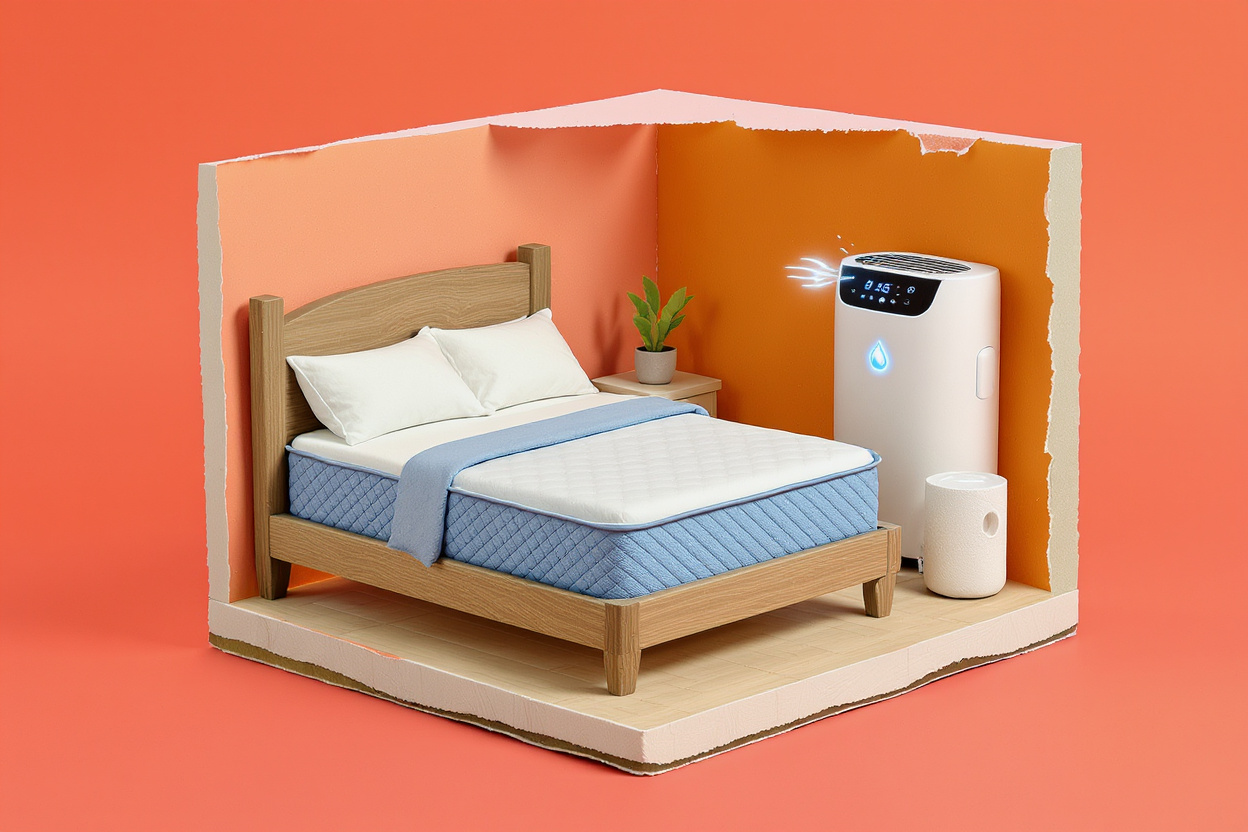
Because dust mite allergen particles are heavy and settle quickly, air purifiers have limited effect on them. Instead, you must use a vacuum equipped with a true HEPA (High-Efficiency Particulate Air) filter. Standard vacuums lack sealed HEPA filtration, meaning they suck up dust mite waste from your carpet and spray it directly back into your breathing zone.
For pet dander, which stays airborne for long periods, a true HEPA air purifier is highly effective. Ensure the unit runs continuously in your bedroom. Additionally, keep pets out of your bedroom entirely to preserve it as an allergen-free sanctuary.
Navigating the pharmacy aisle: a quick guide to relief
When environmental controls are not enough, standard pharmacological therapies can target different points of the allergic cascade.
Oral second-generation antihistamines (such as cetirizine, loratadine, or fexofenadine) work by selectively blocking H1 receptors. They stop free histamine from binding to your sensory nerves and blood vessels. They are highly effective for rapid relief of acute symptoms like sneezing, itching, and runny nose, but they do little to relieve established nasal congestion.
Intranasal corticosteroid sprays (like fluticasone or budesonide) are the most effective overall treatment for moderate-to-severe symptoms. Unlike antihistamines, they do not just block histamine; they suppress the transcription of inflammatory genes, directly reducing the production of cytokines and chemokines. This halts both the early-phase swelling and the late-phase recruitment of inflammatory cells, effectively relieving nasal congestion.
- How allergy treatments block the cellular cascade
- Saline Rinse
- Stage 1: Allergen
- Steroid Spray
- Stage 2: Genes
- Antihistamine
- Stage 3: Receptor
- 1. Allergen
- 2. Cytokine Genes
- 3. H1 Receptor
- Mast Cell
- WASHED OUT
- BLOCKED
- OCCUPIED
- Physically clears pollen and irritants from the nasal mucosa, preventing them from binding to IgE antibodies on mast cells to stop the cascade before it starts.
Nasal saline sprays and rinses serve as an excellent non-pharmacological foundation. They hydrate the nasal lining, support natural ciliary clearance, and wash away trapped allergens and physical irritants. Always use saline rinses first to clear your nasal passages before applying steroid sprays, ensuring the medication directly contacts your nasal mucosa.
Sources
References
- Galli, S. J., et al. (2005). Mast cells as "tunable" effector and immunoregulatory cells: recent progress. *Journal of Allergy and Clinical Immunology*.
- Saitoh, S., et al. (2022). Pathophysiology of allergic rhinitis: mast cell activation and therapeutic targets. *Frontiers in Immunology*.
- Custovic, A., et al. (2022). Indoor allergens, air filtration, and respiratory health. *Clinical and Translational Allergy*.
- Meng, Y., et al. (2022). Pathophysiology and pharmacological management of allergic rhinitis. *Frontiers in Medicine*.
- Allergen Barrier Protection in the Management of Allergic Rhinitis: A Systematic Review and Meta-Analysis (2020). *American Journal of Rhinology & Allergy*.
- American Academy of Otolaryngology–Head and Neck Surgery. Clinical Practice Guideline: Allergic Rhinitis (Environmental Control Measures Summary).
- Cochrane Database of Systematic Reviews. Saline irrigation for allergic rhinitis.