

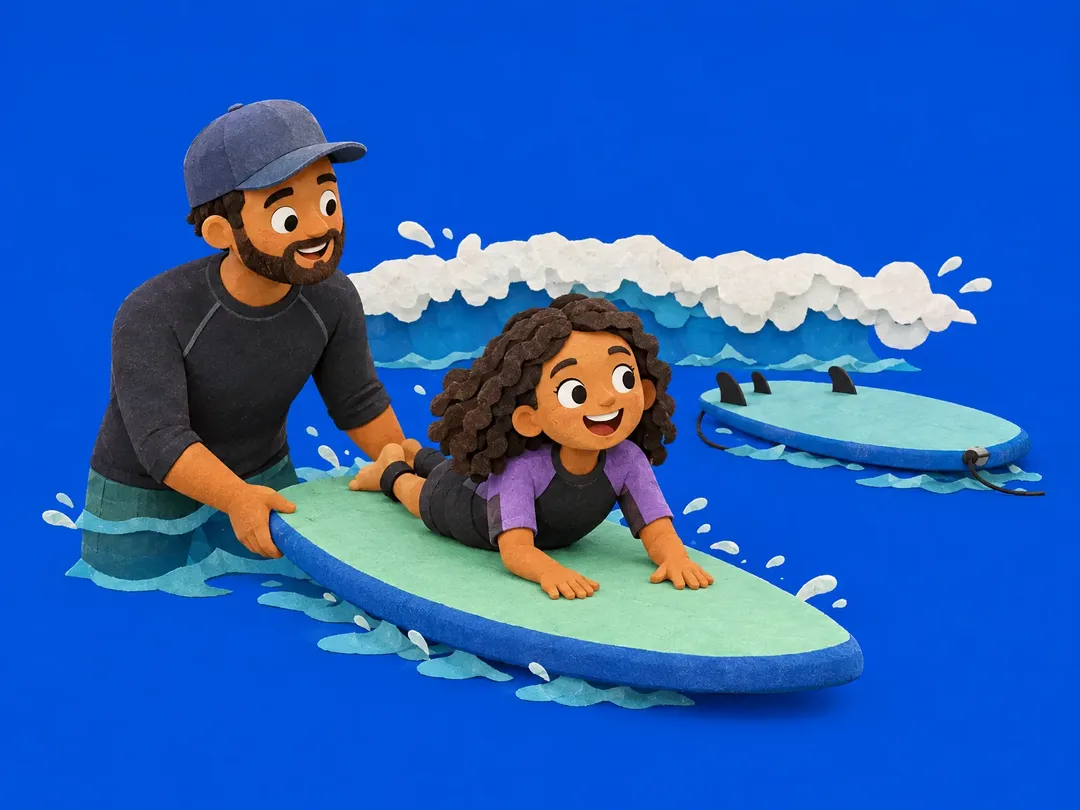
Surfing starts with the foam, not the big waves
Picture a wave far out at sea, a long smooth bump of water rolling toward the beach. It looks calm out there. Then, close to shore, the top of it tips over and turns into a tumbling line of white bubbles that rushes up the sand. Surfing is the game of riding that moving water on a board, and a beginner starts with the bubbly part.
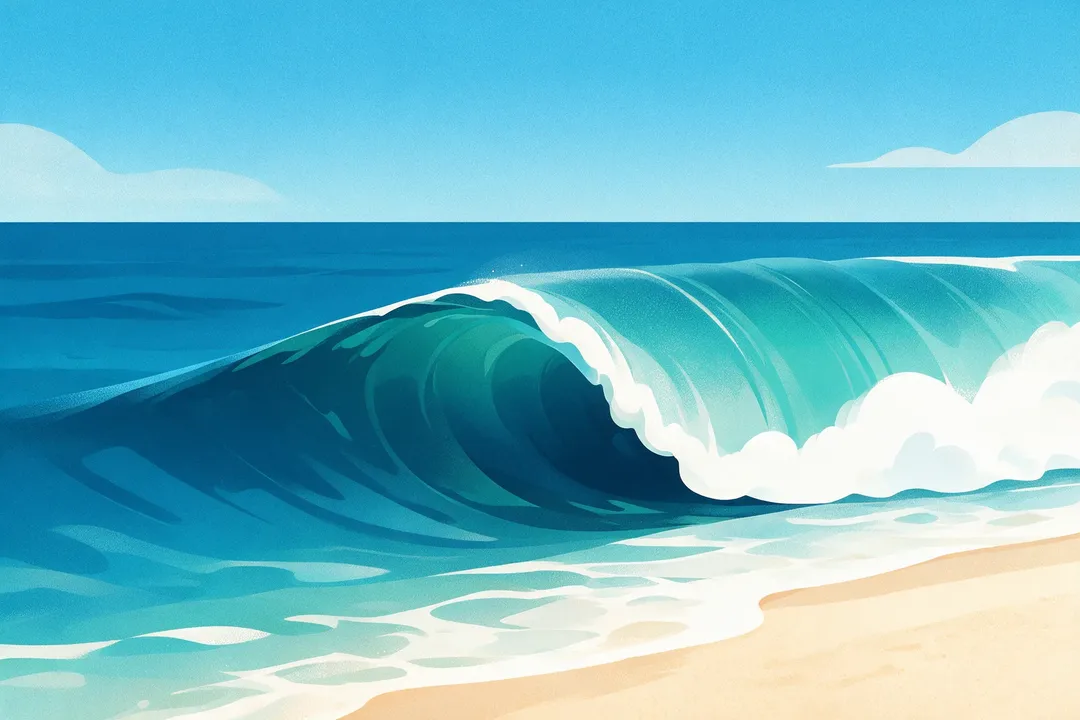
Most ocean waves begin with wind. When wind blows across the sea for a long time, it pushes the water into bumps called swells. Swells can travel a very long way across deep water, and the water itself mostly bobs up and down while the wave's energy moves forward, a bit like a ripple running along a rope you shake.
- Buoy
- Water orbit
- Wave energy
Why waves break
Trouble starts for the wave when the sea floor rises. As the water gets shallow, the bottom of the wave drags on the sand and slows down, but the top keeps going. The top runs ahead of its own feet, leans forward, and falls over. That falling is called breaking.
- Cross-section of a swell rising over a sandbar and breaking into foam
- Deep water
- Shallow sand
- Crest
- Base
- Wave speed
- Water particles
After a wave breaks, it becomes whitewater, the foamy white roller full of air bubbles. Whitewater keeps pushing toward the beach, and it pushes gently enough that a beginner on a big soft board can ride it. Waves break in roughly the same places every day, where the sand gets shallow, so a surfer who learns to spot those places knows where the foam will be.
Watching the beach before dipping a toe in
Good surfers spend their first minutes at the beach standing still. They look at the water from the sand, because the sea changes every day and every hour. Watching first tells you where the waves break, how big they are, and whether the water is calm enough for you today.
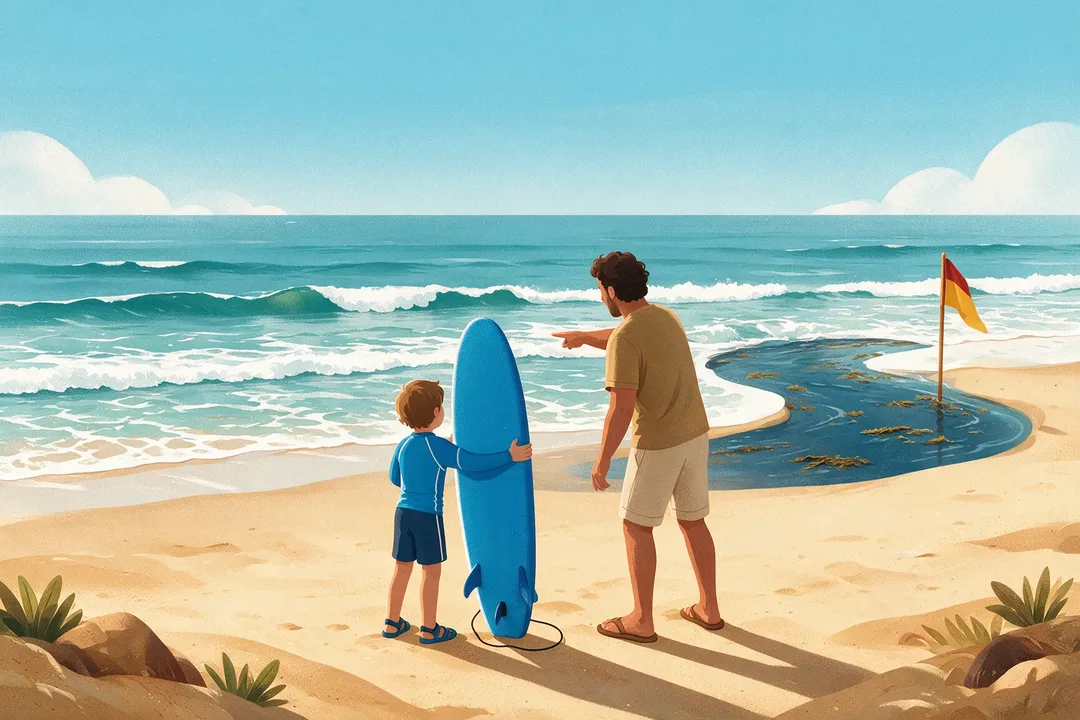
While you watch, look for a few things. Find the spots where the foam rolls in smoothly. Notice any place where the water looks darker and flatter between breaking waves, with foam or bits of seaweed drifting out to sea. That can be a rip current, a strong stream of water flowing away from the beach, and it is a place to stay away from.
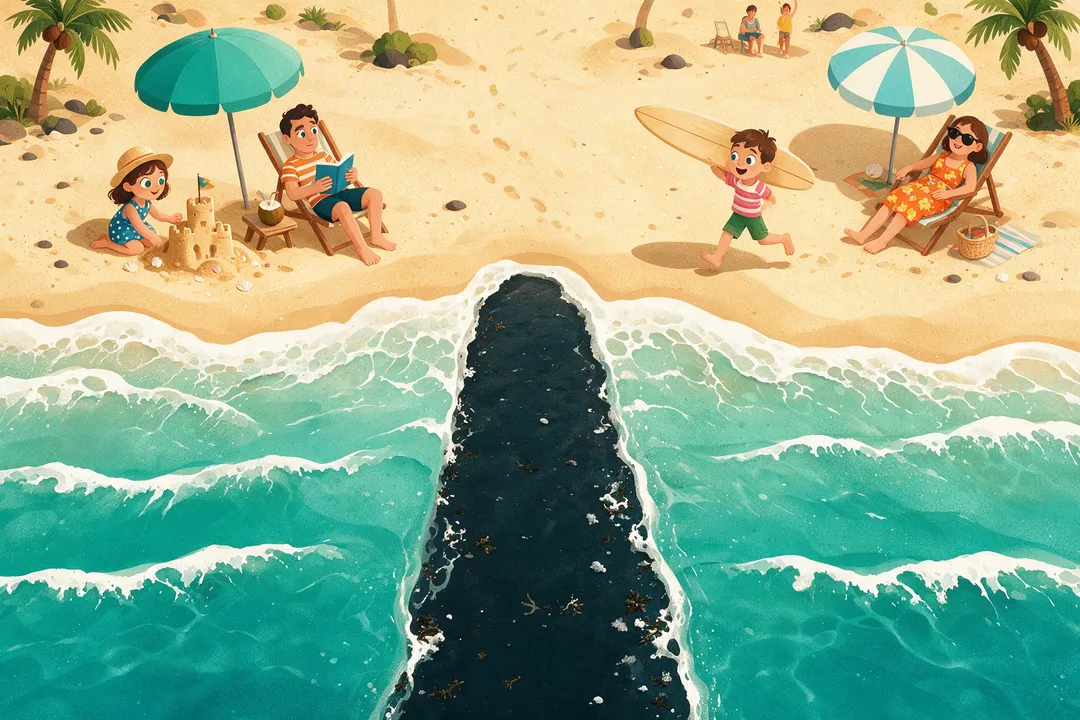
The lifeguard and your buddy
Next, find the lifeguard. Lifeguards are trained helpers who watch the water, spot people in trouble, and swim out to rescue them. Many beaches use flags to show where it is safe to swim and surf. Choose a beach with a lifeguard, stay in the area they are watching, and ask them about the waves if you are not sure.
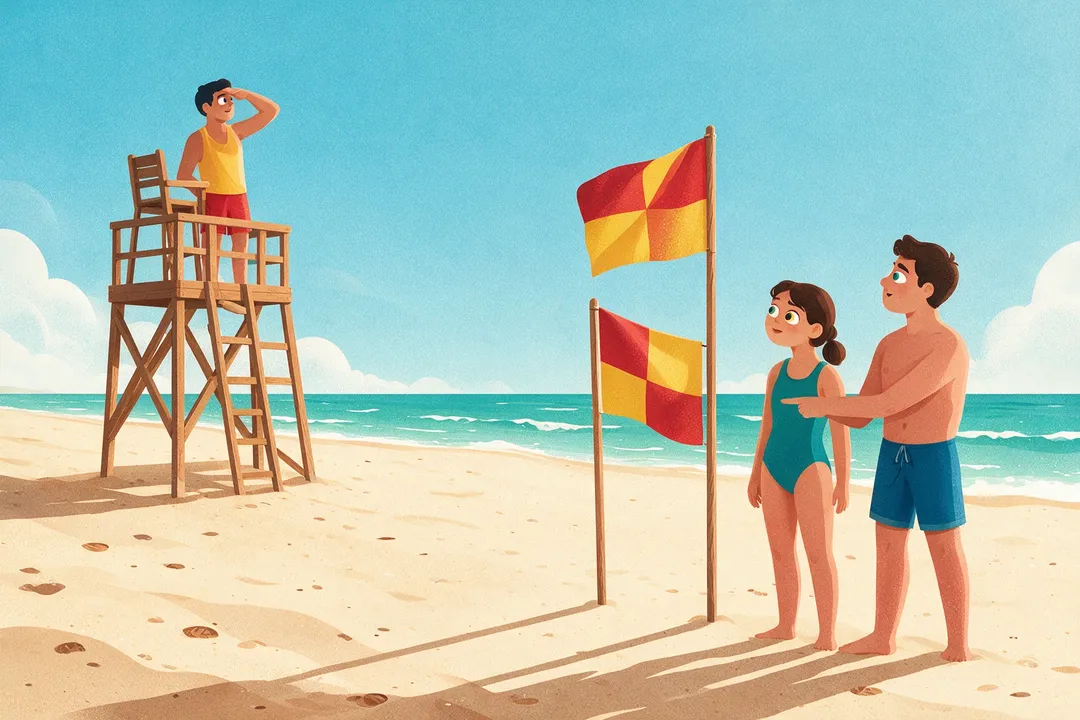
Never surf alone. Always go with a grown-up who stays close and keeps an eye on you, and agree on a meeting spot on the sand before you go in. If you ever feel tired or scared in the water, wave one arm above your head so the lifeguard and your grown-up know you need help.
The beginner board: long, wide, and soft
A surfboard is a long, flat board that floats on water and carries you while a wave pushes it. The first board for a young surfer is usually a soft-top, also called a foamie. It is long, wide, and covered in soft foam, so it feels a little like a giant floating mattress.
Those three features each help in a simple way. A long, wide board floats higher and wobbles less, so it is easier to lie on and later to stand on. The soft foam top means a bump from the board hurts much less than a hard board would, which makes falling less scary.
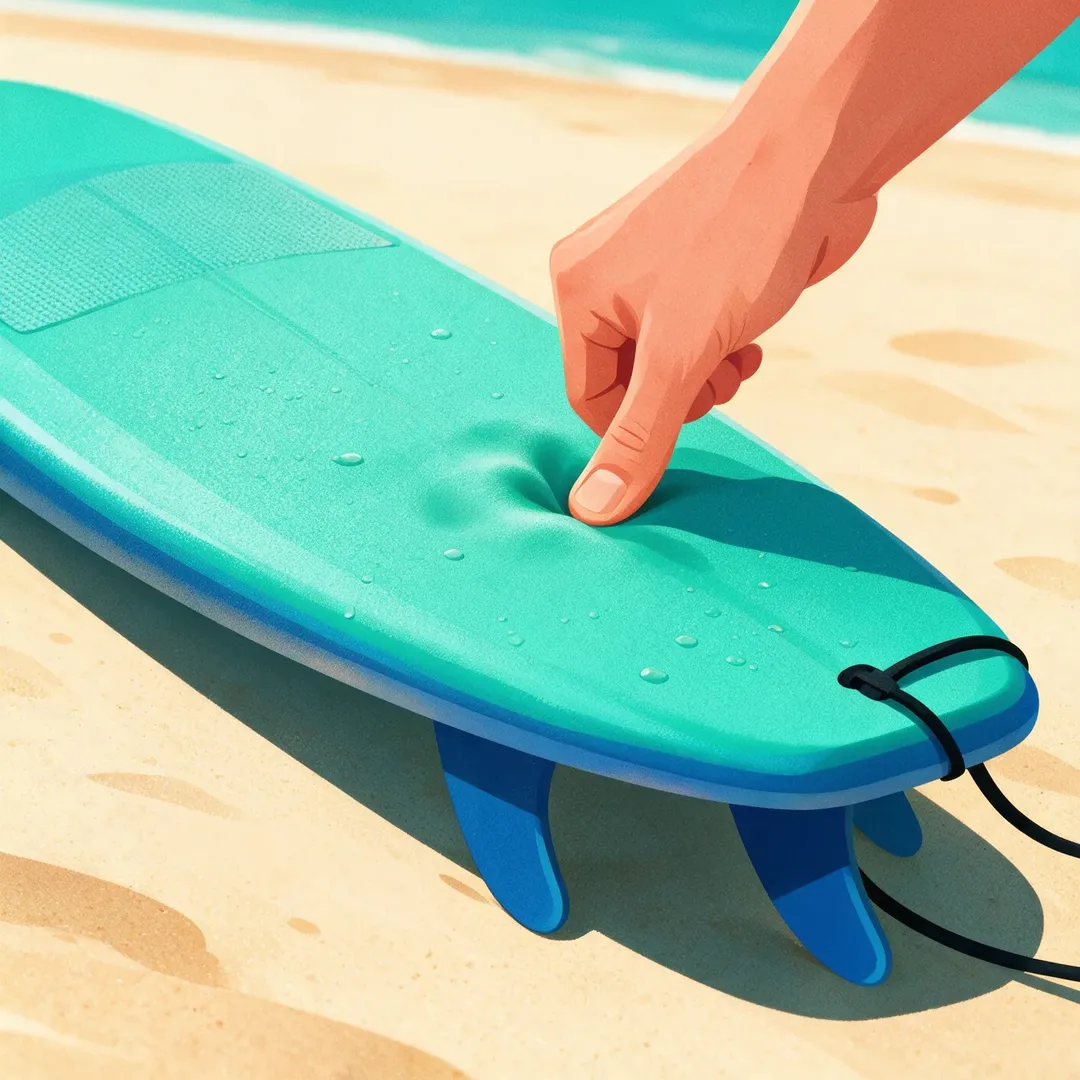
The parts of the board
Every surfboard has the same main parts, and surfers use these words all the time.
- Nose: the front tip of the board.
- Tail: the back end of the board.
- Deck: the top, where you lie and stand.
- Rails: the two side edges.
- Fins: small soft pieces under the tail that help the board go straight.
- Leash: a stretchy cord that straps to your ankle and keeps the board from floating away.
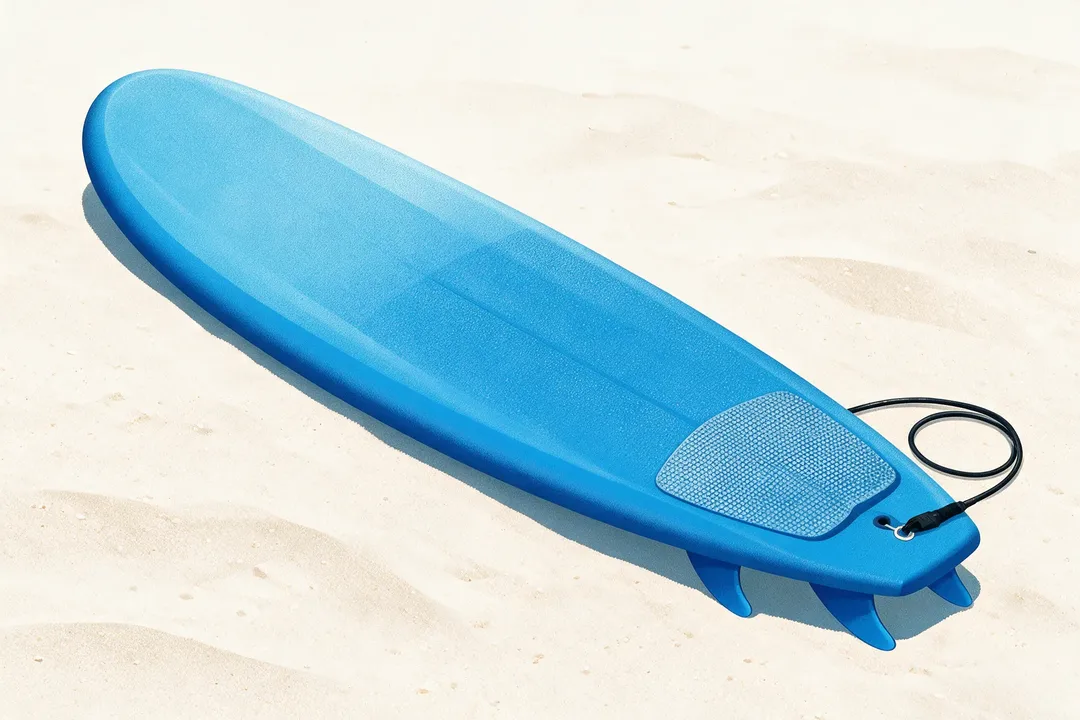
The leash goes on the ankle of your back foot. If you fall off, the board stays close instead of drifting toward other people in the water.
Lying down and finding the sweet spot
Before you ride any wave, you learn to lie on the board in the right place. Surfers call it the sweet spot. Lie on your belly in the middle of the deck, with your body straight along the center of the board and your head looking forward.
Your position from front to back matters a lot. If you lie too far forward, the nose dips under the water and the board can stop suddenly or tip you over. If you lie too far back, the nose sticks up in the air and the board drags like a brake. Most beginners find the sweet spot when their toes sit near the tail and the nose rides just a little above the water.
- Side view of a surfer lying on a foam board in the water
- Trim angle
- Forward
- Back
- Rider position along the board
- Nose
- Sweet spot
- Nose diving
- Tail dragging
- Almost there
Practice on the sand first
The sand is the best place to find your spot. Put the board on the beach with the fins buried a little so it does not wobble, lie down, and ask your grown-up to check that you are centered. In the water, keep your legs together and your chin up, and look at the nose. If it keeps dipping, slide back a little. If it points at the sky, slide forward.
Digging deep: how to paddle with your arms
Paddling is how a surfer moves the board through the water, using the arms like a swimmer. Lying in the sweet spot, reach one arm forward into the water, pull it back along the side of the board toward your hip, then lift it out and do the same with the other arm. Cup your hands a little, like scoops, so each pull grabs more water.
Long, steady strokes work better than fast splashing. Reach far, pull all the way back, and keep your chest slightly lifted so you can see where you are going. Your legs stay still and together on the board, because kicking makes the board wobble.
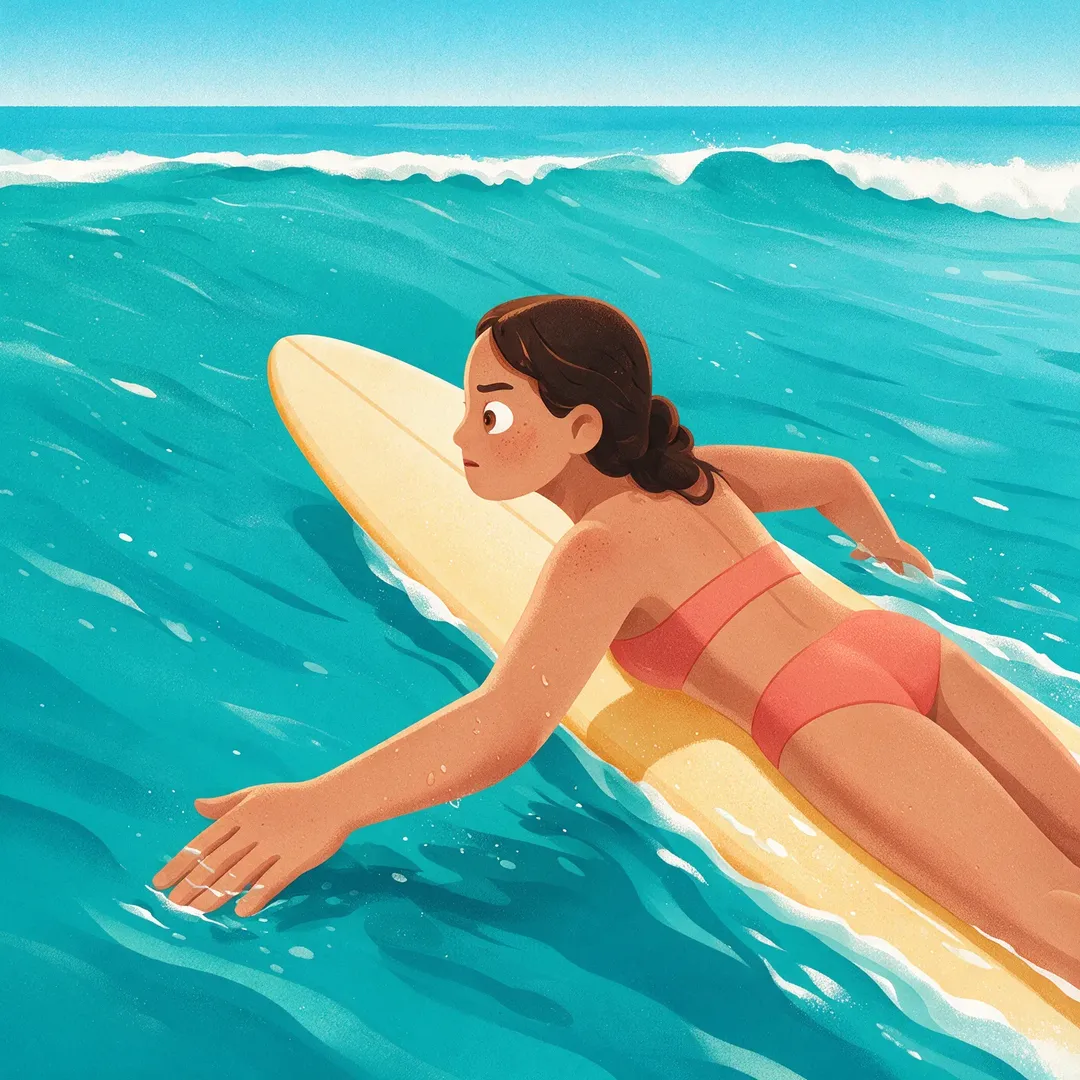
- Side view of a surfer paddling with alternating arm strokes
- Freestyle paddling
Why speed matters
A wave can only carry you if your board is already moving when the wave arrives. When a roller of foam comes from behind, paddle toward the beach as hard as you can for a few strokes. As the foam catches the tail, you will feel the board lift and slide forward on its own. That push is the moment you have caught the wave.
Catching the friendly white foam
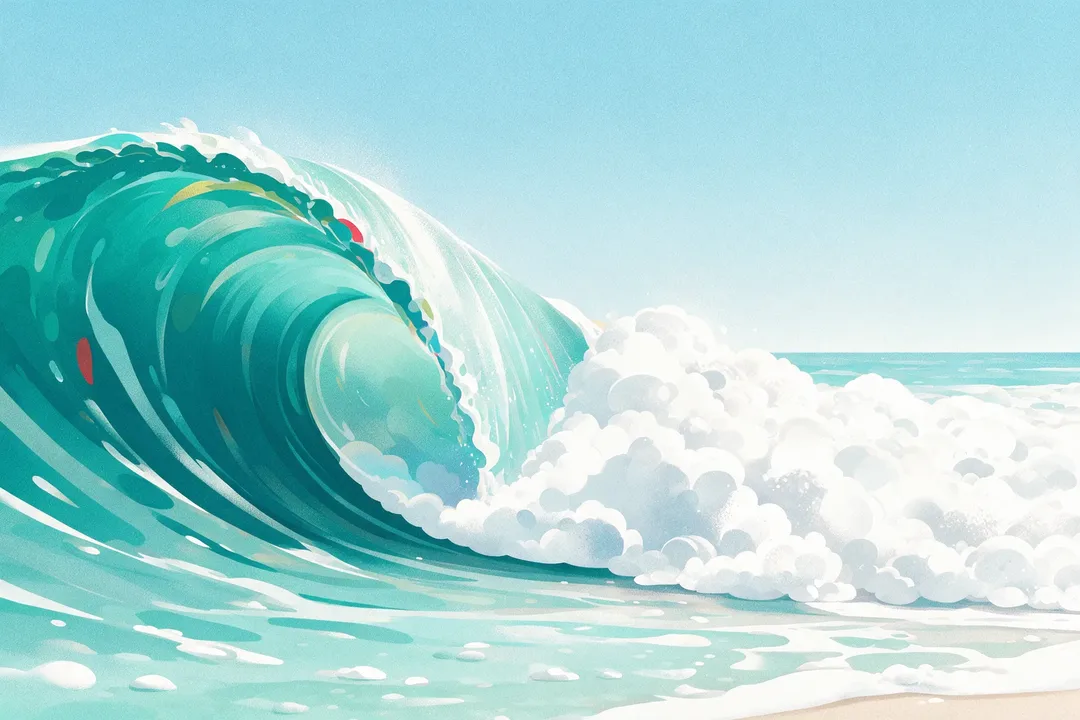
The ocean offers two kinds of waves near the shore, and a beginner should learn to tell them apart. An unbroken wave is a smooth wall of water that grows steep and tall before it tips over. A whitewater wave has already broken and rolls toward the beach as a low line of foam.
Steep unbroken waves are for experienced surfers. They move fast, they can throw a small rider and the board down hard, and catching them takes skills you will learn much later. Whitewater is the friendly one. It pushes the board straight toward the beach at a speed you can handle, and it usually comes in water shallow enough for a grown-up to stand beside you.
Your first ride
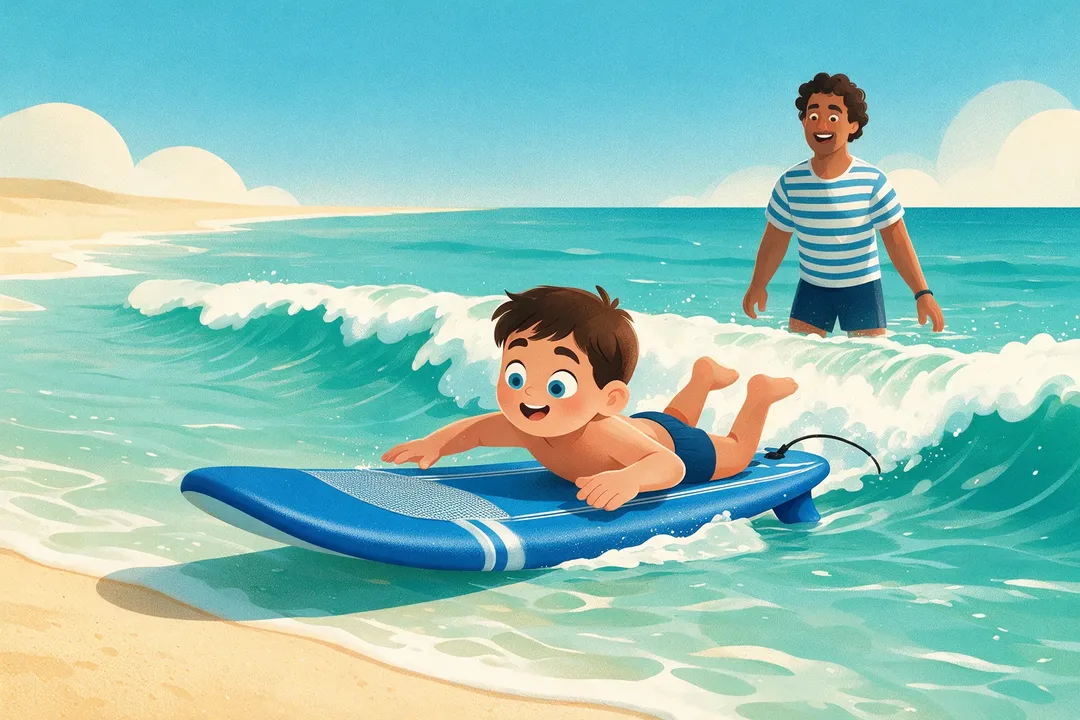
Stand in water about as deep as your waist, with the board pointing at the beach and your grown-up close by. Watch behind you for a line of foam. When it is a few steps away, lie down in the sweet spot, paddle hard, and let the foam carry you. Your first rides can be on your belly, and many surfers spend a whole morning just enjoying the glide to the sand.
Placing hands flat and jumping to your feet
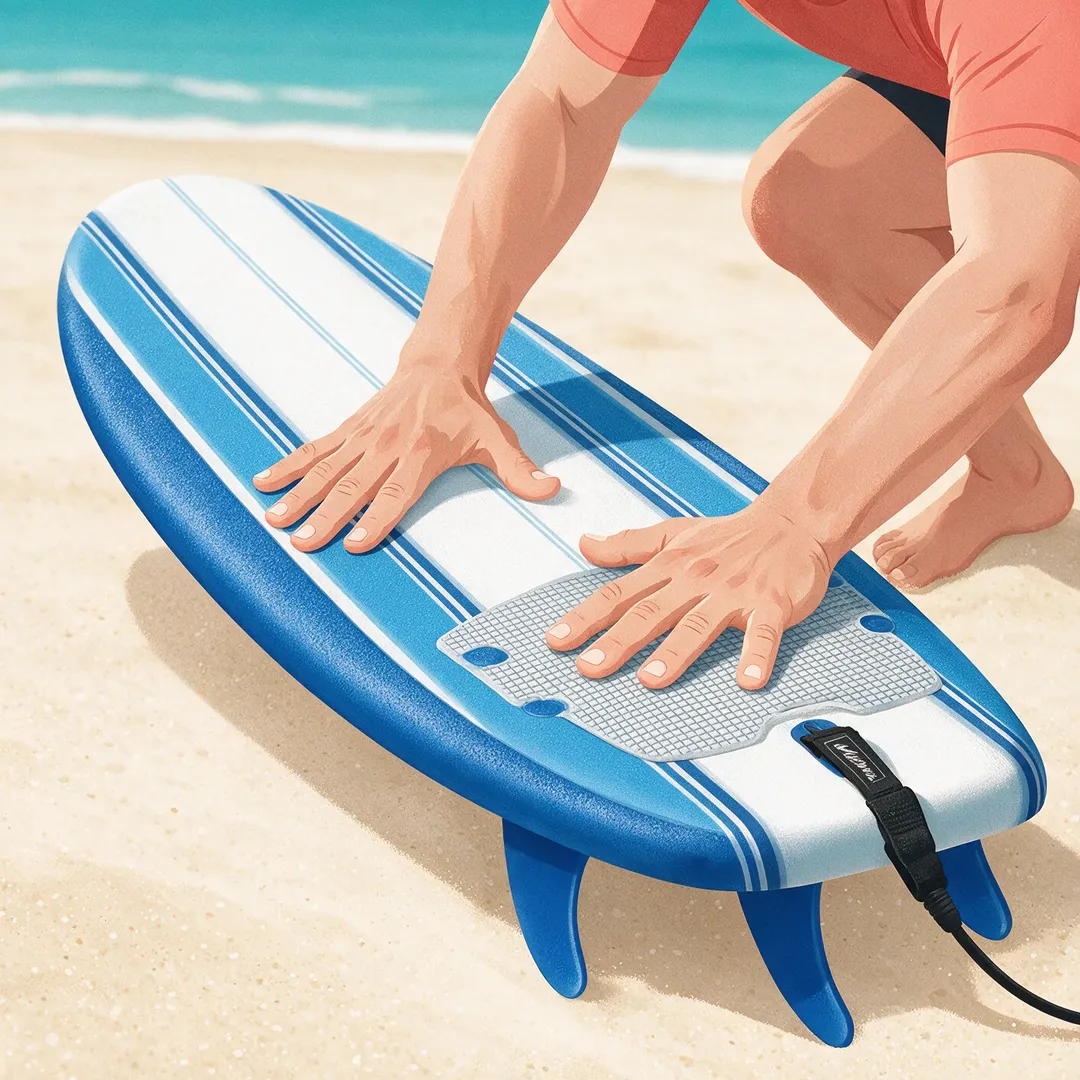
Standing up on a moving board is called the popup. It happens in one quick move, so surfers practice it many times on the sand before trying it in the water. Draw a board shape in the sand, or use your board with the fins buried, and lie on your belly in the sweet spot.
Put your hands flat on the deck right under your chest, close to your ribs, with fingers pointing forward. Never grab the rails, because hands on the edges tip the board. Push your chest up, as if starting a push-up, and in the same motion bring your feet under you.
Landing in a crouch
Your feet land sideways across the board, one in front of the other, shoulder-width apart. Bend your knees low like a basketball player ready to jump, keep your arms out for balance, and look toward the beach instead of at your feet. Standing tall and stiff makes you fall; staying low keeps you steady.
- Surfer practicing the popup on the sand in four stages
- Lie centered
- Push up
- Jump to feet
- Low crouch
Some surfers put the left foot in front and some put the right. Try both on the sand and keep the one that feels natural. In the water, wait until the foam is pushing you and the board feels steady, then pop up. Falling on the first tries is normal for everyone.
Falling like a starfish and covering your head
Every surfer falls, from the first lesson to the best rider in the world. Falling well keeps you safe. The most important rule is to fall away from your board, never on top of it or in front of it, where a wave could push it into you.
In the deeper water, fall flat like a starfish, arms and legs spread, landing on your back or your belly with a gentle splash. A flat fall keeps you near the surface. In shallow water, never dive or jump in headfirst, because the sand can be much closer than it looks. Sit down or fall flat on your bottom instead.
Coming back up
While you come back to the surface, cover your head with both arms, hands on top and elbows in front of your face. Your board may still be close on its leash, and your arms protect you from a bump. When your head is out of the water, look around, find your board, and check for the next line of foam before climbing back on.
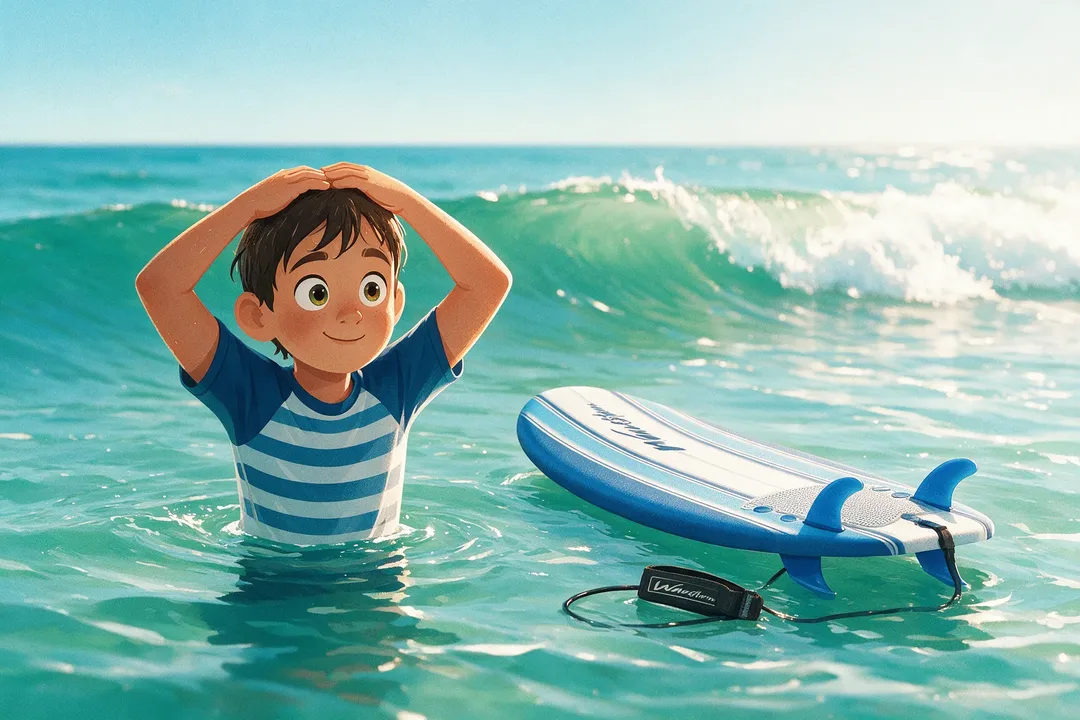
If a wave tumbles you, stay relaxed and wait a moment, because the water lets go quickly and you will float up. Then give your grown-up a thumbs-up so they know you are fine.
Sources
Audiovisual sources
- When or While? — wordwall.net
- Leafy Letter Y Wallpaper — wallpapers.com
- Diferencia entre then y than en inglés - Banner — migaku.com
- Before là gì? — vn.elsaspeak.com
- Wavestorm - Classic Soft Top Foam 7ft Surfboard Surfboard for Beginners and All Surfing Levels Complete Set Includes Leash... — amazon.com
- Soft Top Foam 7' Surfboard for Beginners and All Surfing Levels Complete Set Inc - Image 1 of 4 — ebay.com
- Papaya - Soft Top Foam Surfboard - Includes Leash and Fins - Lt. Blue — konasurfco.com
Frequently asked questions
Why do ocean waves break near the shore?
Waves break when the sea floor rises and the water gets shallow. The bottom of the wave drags on the sand and slows down, but the top keeps going, so it leans forward and falls over. That falling is called breaking.
What is whitewater in surfing?
After a wave breaks, it becomes whitewater, the foamy white roller full of air bubbles. Whitewater keeps pushing toward the beach gently enough that a beginner on a big soft board can ride it. A breaking wave and whitewater are two stages of the same wave.
What is a soft-top surfboard and why do beginners use it?
A soft-top, also called a foamie, is a long, wide board covered in soft foam, so it feels a little like a giant floating mattress. A long, wide board floats higher and wobbles less, making it easier to lie on and stand on, and the soft foam top means a bump from the board hurts much less than a hard board would.
How do I find the sweet spot when lying on a surfboard?
Lie on your belly in the middle of the deck, with your body straight along the center of the board and your head looking forward. Most beginners find the sweet spot when their toes sit near the tail and the nose rides just a little above the water. If the nose keeps dipping, slide back a little; if it points at the sky, slide forward.
What should I do first when I arrive at the beach with a surfboard?
Watch the water from the sand before going in, because the sea changes every day and every hour. Watching first tells you where the waves break, how big they are, and whether the water is calm enough for you today. Then find the lifeguard and go in with a grown-up.