
Invisible enemies: the secret life of the dust mite
Invisible enemies: the secret life of the dust mite
At this very moment, on the surface of your mattress, pillow, or sofa, a silent battle for survival is being waged. You share your home with millions of microscopic tenants: house dust mites, mainly of the species Dermatophagoides pteronyssinus. They are not insects; they belong to the arachnid class and measure just between 0.2 and 0.5 millimeters, making them completely invisible to the naked eye.
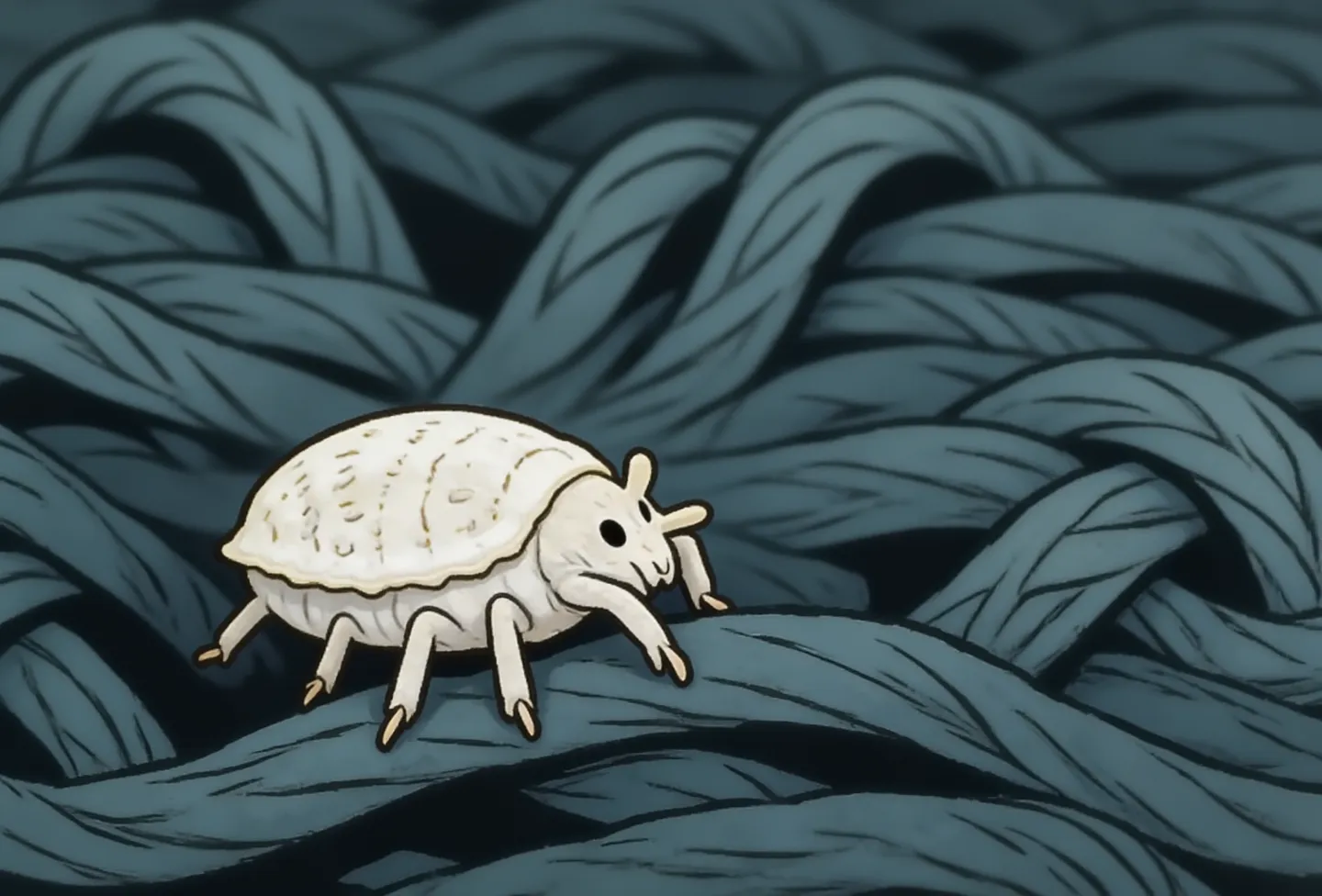
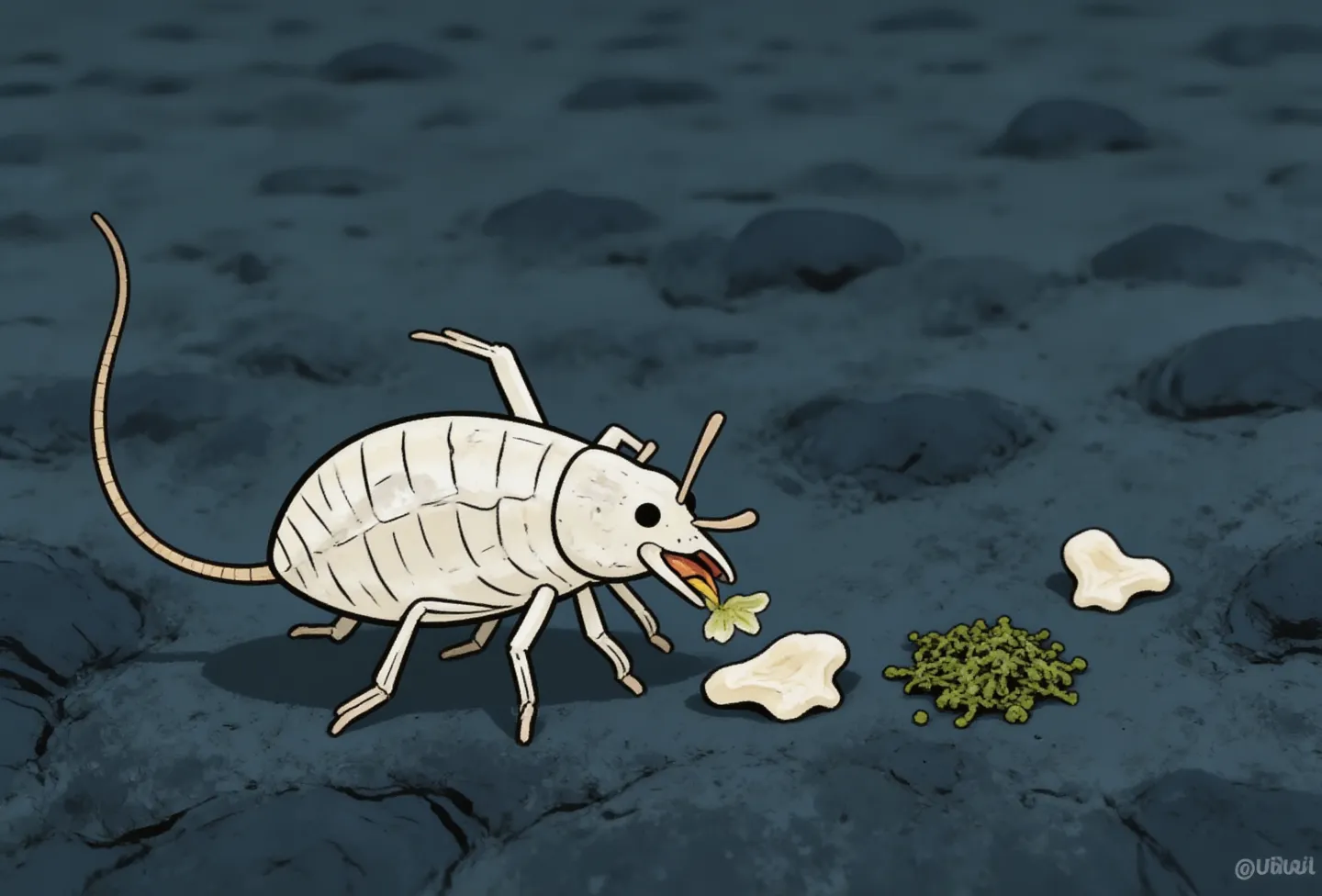
Their daily sustenance comes directly from you. Humans shed approximately 1.5 grams of dead skin scales a day—a minuscule amount for us, but a colossal feast for a mite colony. However, they cannot consume these dry scales directly; they need microorganisms like environmental fungi to pre-digest and soften them first.
A mite's life cycle goes through several stages: egg, larva, nymph, and adult. Under optimal conditions, this journey takes just a month, and an adult can live up to 70 days. During its brief existence, a single female can lay between 40 and 80 eggs, which explains why a small population can multiply exponentially in a matter of weeks if the environment allows it.
<quizid="687f5e41-bfe3-5ec7-91bd-ee63c9dc79e5" type="fillInTheBlank" points="5" orderConstraint="first">
The primary food source of dust mites in the home is human skin ____, which must be pre-digested by environmental fungi.
options:
- *scales
- cells
- fats
- secretions
Answer: scales
feedback:
Mites feed on the dead skin scales that humans shed daily, which are pre-softened by microscopic fungi.
</quiz>
The tropical paradise of Santa Marta: heat and humidity
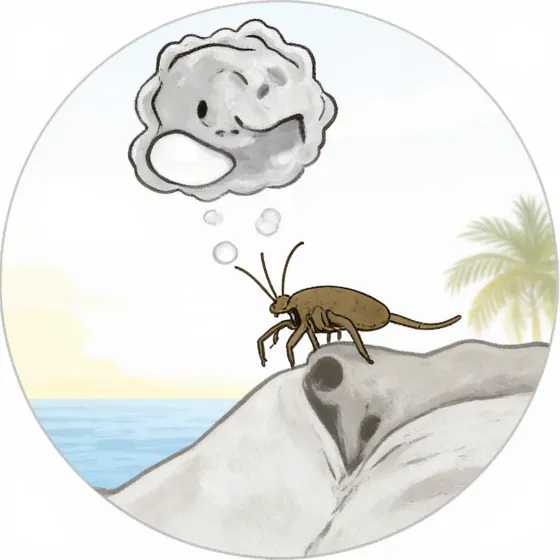
For a mite to thrive, temperature and humidity are not simple variables of comfort; they are a matter of life or death. Mites do not drink water; they absorb moisture from the air through their cuticle (their skin). Below certain humidity levels, they dehydrate and die.
Coastal cities like Santa Marta, Colombia, offer the perfect ecosystem for these arachnids. With an average annual temperature of 28 °C and a warm, dry tropical climate, regional homes maintain ideal thermal ranges for their metabolism. But the decisive factor is relative humidity.
In Santa Marta, the average annual relative humidity hovers around 75-80%, typically fluctuating between 70% and 90% depending on the time of day and year. The optimal development range for Dermatophagoides pteronyssinus is precisely a humidity level above 75%. When the rainy season arrives (from May to November), the accumulation of water vapor inside homes skyrockets, accelerating their reproductive cycle to the maximum. Furthermore, the lack of direct solar radiation in enclosed spaces or poorly ventilated rooms eliminates the only natural disinfectant capable of slowing their spread.
<quizid="85b1e994-f00f-5654-8a81-d8cfa892a9c1" type="multipleChoice" subtype="singleAnswer" points="5" orderConstraint="showAfter(687f5e41-bfe3-5ec7-91bd-ee63c9dc79e5)">
Why is the climate of a coastal city like Santa Marta ideal for dust mite proliferation?
options:
- Due to the low temperatures that freeze their natural predators.
- *Due to the combination of an average temperature of 28 °C and 70-90 % relative humidity.
- Due to the sea breeze that transports skin scales to beds.
- Due to the lack of oxygen in areas near sea level.
feedback:
Mites thrive in warm temperatures and sustained relative humidity above 50-60%, conditions that Santa Marta naturally offers year-round.
</quiz>
The immunological cascade: why we get rhinitis
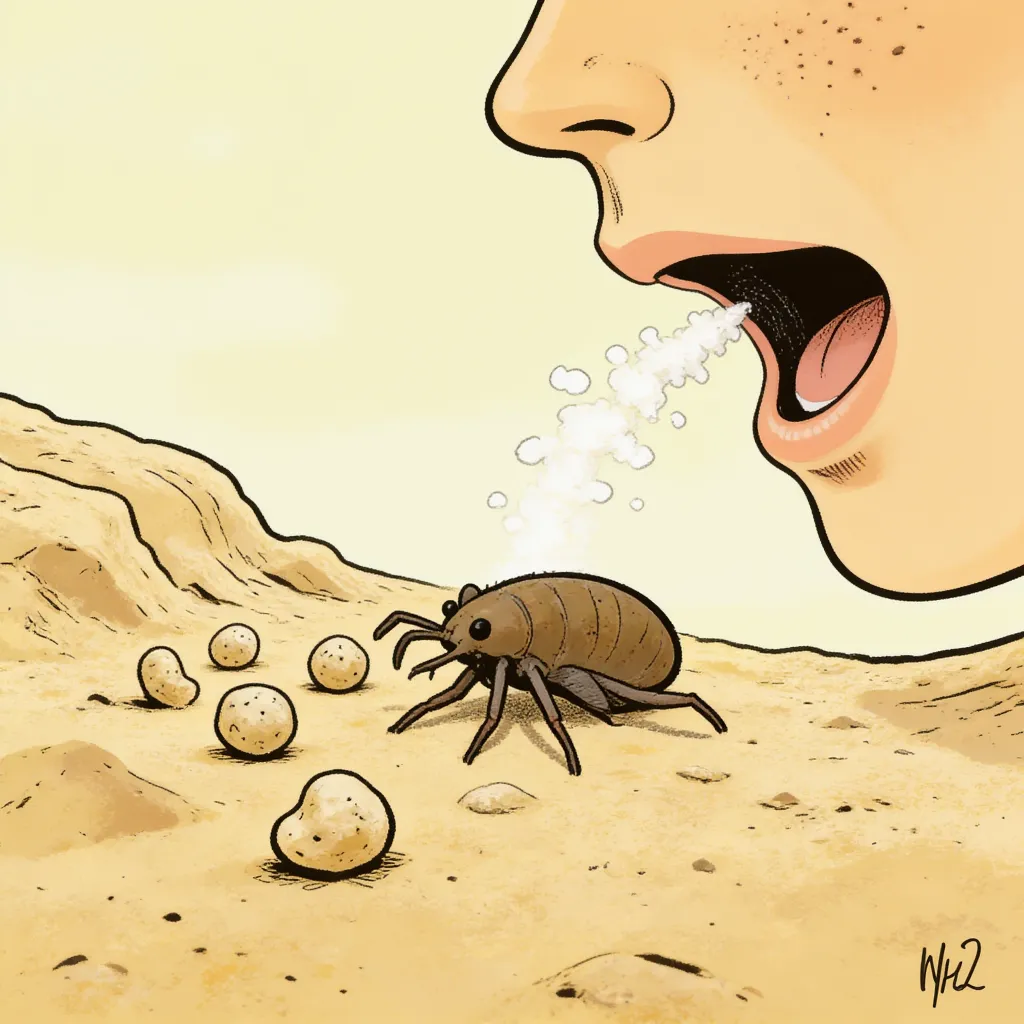
There is a common misconception: thinking that allergic rhinitis is caused by the bite or physical presence of the live mite. In reality, the true enemy is their physiological waste. A single mite produces about 20 fecal particles per day. These droppings contain highly allergenic proteins, the most studied being Der p 1 (a digestive enzyme present in their feces) and Der p 2 (found in their body).
When these microscopic particles come into contact with the nasal mucosa of a predisposed person, a complex defense response is triggered:
- Sensitization phase: The immune system mistakenly identifies the Der p 1 and Der p 2 proteins as threats, producing specific antibodies called Immunoglobulin E (IgE).
- Re-exposure phase: Upon inhaling dust from the mattress again, the proteins bind to the IgE already attached to cells called mast cells in the nose.
- Degranulation phase: The mast cells rupture and release inflammatory substances, mainly histamine. This causes blood vessel dilation, nerve irritation, and mucus secretion.
- Mast Cell Activation and Degranulation
- Starting cycle...
- BLOOD VESSEL
- MAST CELL
- Der p 1
- The allergen Der p 1 (dust mite) approaches the IgE antibodies
- Cross-linking: Der p 1 connects two adjacent IgE antibodies and activates the mast cell
- Degranulation: internal granules fuse together, releasing histamine
- Histamine reaches the blood vessel, causing vasodilation
This process clinically translates into typical rhinitis symptoms: fits of sneezing, severe nasal congestion, itchy nose and eyes, and a constant runny nose.
<quizid="1a45eefe-1d9e-532e-b8e1-6cb2816de93a" type="trueFalse" points="5" orderConstraint="showAfter(85b1e994-f00f-5654-8a81-d8cfa892a9c1)">
The main trigger of allergic rhinitis is not the physical presence of the live mite, but rather the allergenic proteins (such as Der p 1) present in their fecal particles.
options:
- *True
- False
feedback:
The majority of allergenic proteins are concentrated in mite excretions. When inhaled, these microscopic particles trigger the IgE-mediated inflammatory response in the nasal mucosa.
</quiz>
The domestic humidity trap
Many people buy humidifiers hoping to "purify" or soothe the air in their rooms to relieve nasal congestion. However, in coastal or humid climates, this practice is a serious error in home engineering.
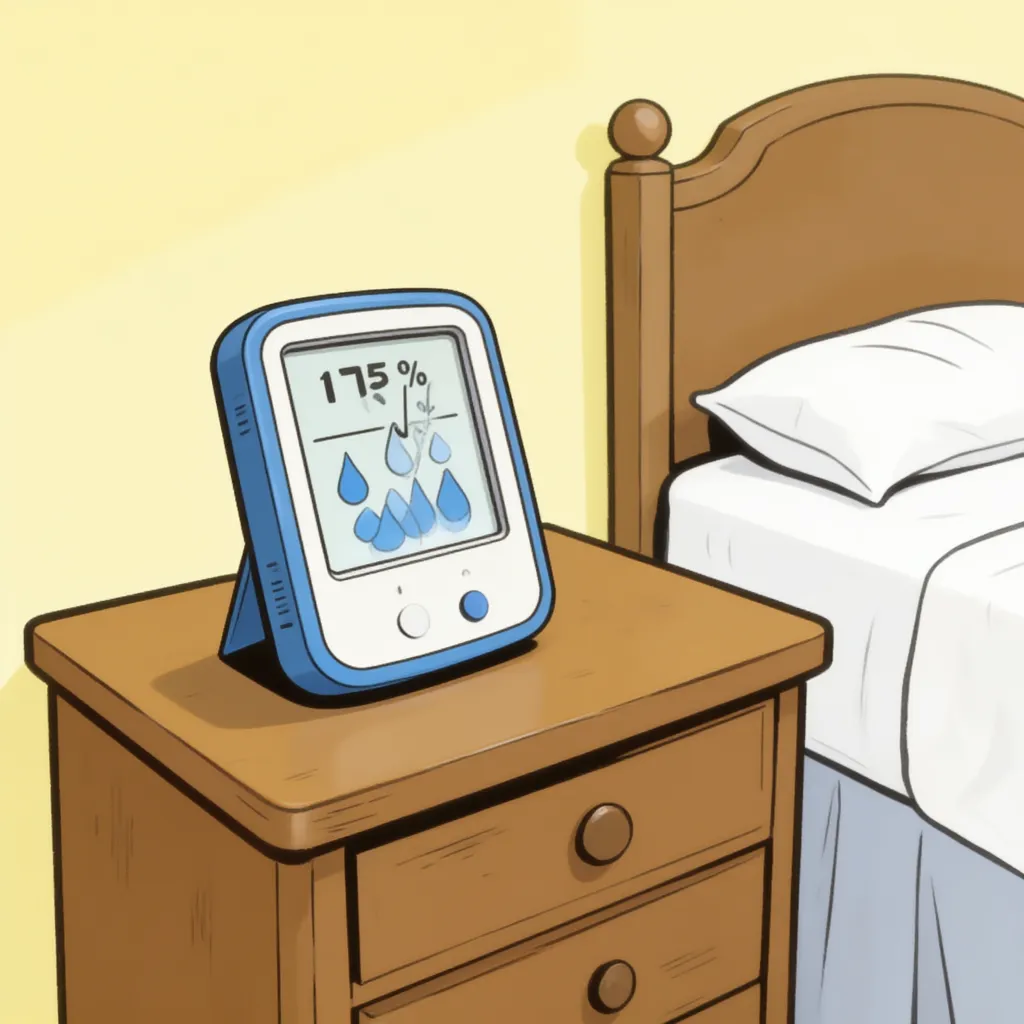
The science of allergology is clear: to stop mite reproduction, relative humidity in the home must be kept below 50%. When the environment drops below this threshold (especially in ranges of 35-50%), mites lose the ability to absorb water, dehydrate, stop reproducing, and die.
- Relative Room Humidity
- Adjust relative humidity level
- Vital Status
- Stable
- Mite Population
- 100 (Scale)
- The humidity level of the air determines the passive transpiration of the mite.
In humid environments like Santa Marta, the goal is the opposite: dehumidification is required. Cross-ventilation during hours of lower outdoor humidity or using dehumidifying functions on air conditioning units ("Dry" mode) are key tools for keeping indoor air outside of the mite's survival range.
<quizid="c1fb1df0-409e-5af5-87d1-4fbc13152ae5" type="multipleChoice" subtype="singleAnswer" points="5" orderConstraint="showAfter(3a9d4427-ee15-5749-bd08-142649ad2724)">
What is the recommended relative humidity range in the bedroom to stop dust mite proliferation?
options:
- Between 75% and 90% to dry out their membranes.
- *Below 50%, ideally in a range of 35-50%.
- Near 100% to drown them with excess water.
- Exactly 65% to stabilize their biological cycle.
feedback:
Keeping ambient relative humidity below 50% dehydrates mites and drastically halts their reproduction cycle.
</quiz>
Filtration engineering: the HEPA mechanism
Sweeping or using a conventional vacuum cleaner can be counterproductive if you suffer from allergic rhinitis. Common vacuum cleaner fabric bags and foam filters retain coarse dust, but let microscopic mite fecal particles (measuring between 10 and 40 micrometers) pass through. These particles are forcefully expelled through the motor's air outlet, remaining suspended in the bedroom air for hours, ready to be inhaled.
The technological solution is the HEPA (High Efficiency Particulate Air) filter. A true HEPA filter (H13 or H14 class) is composed of a randomized web of microscopic fiberglass fibers. Air passes through it, but particles are trapped by three physical mechanisms:
- HEPA Filtration: Physical Particle Retention
- Three mechanisms act in parallel based on particle size and inertia.
- Inertial Impact (large particles)
- High inertia prevents the particle from diverting its path with the air stream, colliding head-on with the fiber.
- Interception (medium particles)
- They follow the airflow, but their physical radius is larger than the distance to the fiber, getting trapped as they brush against it.
- Diffusion (small particles)
- They collide with gas molecules, creating a chaotic (Brownian) motion that inevitably guides them toward the fibers.
- Impaction: Large particles collide directly with the fibers and adhere.
- Interception: Medium particles brush against fibers while following the airflow and get trapped.
- Diffusion: Extremely small particles (<0.1 micrometers) move erratically (Brownian motion), inevitably colliding with fibers.
Thanks to this, an H13 HEPA filter retains 99.95% of particles up to 0.3 micrometers, ensuring that mite excretions and debris are sealed within the equipment and do not return to the room.
Home engineering: practical habits
Managing allergic rhinitis requires redesigning household routines based on physics and biology. Here is a practical action plan for your home:
- Thermal washing: Wash bed sheets, pillowcases, and blankets once a week at a minimum temperature of 60 °C. Extreme heat denatures allergenic proteins and destroys live mites and their eggs.
- Mite-proof covers: Enclose mattresses and pillows in impermeable covers with pores smaller than 10 micrometers. This creates a physical barrier that prevents them from coming out to feed on your skin.
- External Anatomy of the Dust Mite
- Dermatophagoides pteronyssinus (Interactive 3D Model)
- Drag to rotate • Tap a part
- Select a part of the mite on the model to study its biological adaptation.
- Anatomy
- Part
- Technical description here.
- Active dehumidification: In climates like Santa Marta's, use the air conditioner in dehumidifier mode to keep humidity under control. Avoid carpets and stuffed animals in the bedroom, as they act as dust and moisture traps.
- Damp cleaning: Never shake off dust with feather dusters or dry cloths. Use damp cloths that trap particles without dispersing them into the air.
Sources
References
- Aeroallergens and Dermatophagoides mites
- Sleeping with your enemy: Mites and allergy
- House dust mites and environmental allergies
- Dust mite - Biology and ecology
- Climate of Santa Marta and seasonal dynamics
- Average weather in Santa Marta, Colombia
- Climatological characteristics of main cities (IDEAM)
- Immunopathology of allergic rhinitis induced by mites
- Respiratory allergy prevention and management guide
- Clinical efficacy of Der p 1 and Der p 2 allergens
- HEPA filtration and retention of domestic allergens
- Ideal vacuum cleaners for dust mite allergy sufferers
- Filtering systems and fine dust retention
- HEPA Filter: Technical operation and H13-H14 classes